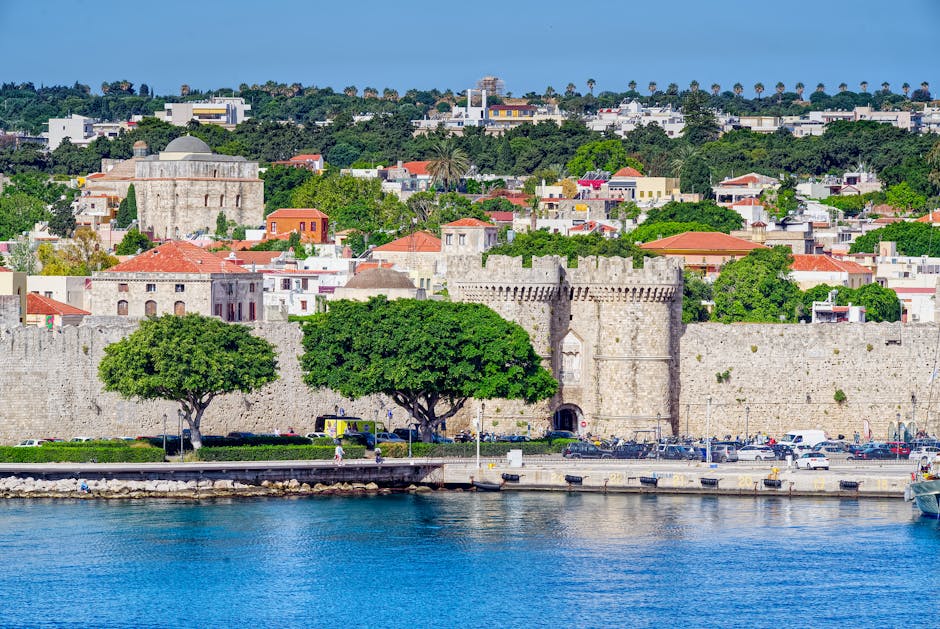






Mount Smith: Breathtaking Views Over Rhodes’ Ancient Acropolis
Introduction
Perched to the west of Rhodes’ medieval Old Town, Mount Smith — often labeled “Monte Smith” on English tourist maps — offers one of the island’s most spectacular panoramas. This natural promontory, dotted with pine trees and edged by olive groves, overlooks Mandraki Bay, the narrow harbor strip and the deep blue of the Aegean Sea. But Mount Smith is more than a lookout: it’s also the site of Rhodes’ Ancient Acropolis, an archaeological ensemble preserving traces of Hellenistic and Roman eras, including temples, a stadium, a theatre and fragments of monuments dedicated to local gods and heroes.
Visiting Mount Smith combines nature and history. The contrast between stone ruins and the vivid blue sea is striking — a favourite for photographers at sunrise and sunset. Families, couples after a romantic spot and archaeology buffs will all find reasons to climb up: picnic areas, shaded paths, panoramic benches and informative panels that place the ruins into Rhodes’ historical narrative. The site is just a few minutes on foot from the Old Town’s West Gate, making it an easy excursion for anyone staying in the historic centre.
In this detailed guide I’ll take you through everything: exact addresses and practical waypoints to get there, opening hours and up-to-date prices (with notes on concessions), descriptions of the main monuments and the best photo spots, tips for making the most of the views (best time slots, recommended gear), plus useful information on accessibility, parking and guided tours. Whether you’re an independent traveller, a casual hiker or a DIY tour operator, you’ll find everything you need to plan a successful visit to Mount Smith and the Acropolis of Rhodes.
Important note: practical details (hours and prices) are indicative and may change with the season or decisions by Greek archaeological authorities. It’s recommended to double-check a few days before your trip on the official Hellenic Ministry of Culture website or with the Rhodes tourist office.
 Click here to book a private walking tour of Rhodes
Click here to book a private photo session in Rhodes
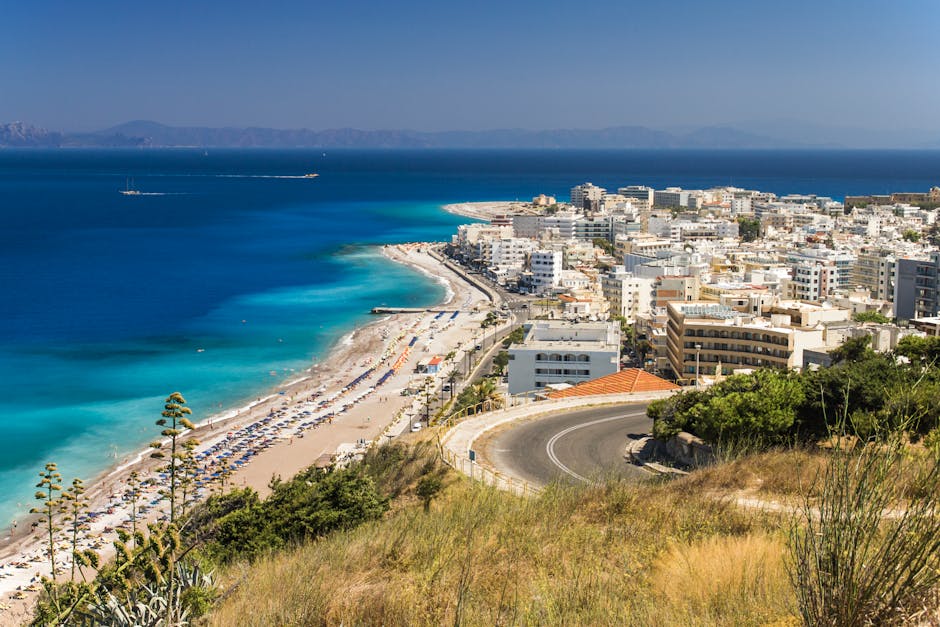
History and Remains of the Acropolis of Rhodes: Temples, Stadium and Theatre
The Acropolis of Rhodes, built on the slopes of Mount Smith, is a major testament to the ancient city-state of Rhodes. The remains span from the Hellenistic period through the early Middle Ages: you can recognise remnants of the Temple of Apollo, sanctuaries dedicated to Athena and other deities, as well as civic structures like the Ancient Theatre and the Ancient Stadium of Rhodes. The archaeological site stretches along a ridge, offering sweeping views of the town and the sea from several vantage points.
One of the most remarkable features is the Ancient Stadium, notable for its elongated shape and orientation that allowed spectators to take in views of the sea while watching competitions. The seating terraces, although partly levelled and reused over the centuries, still reveal their footprint and access routes. The Ancient Theatre, built on the classical Greek model, could hold several thousand spectators; its natural acoustics and orientation toward the sea make it a magical spot, especially at sunset.
The Temple of Apollo, located near the summit of Mount Smith, is identifiable by surviving columns and massive foundations. Architectural fragments, statue bases and inscriptions have been uncovered during successive excavations led by the Rhodes Antiquities Directorate. The archaeological park also contains Roman and Byzantine remains, reflecting continuous occupation and reuse of the site through the ages.
Address and landmark: Acropolis of Rhodes (Monte Smith), Ippokratous Avenue, 85100 Rhodes, Greece. It’s about 750 m west of the Old Town’s Amboise Gate (Northwest Gate); expect a 10–20 minute uphill walk from Hippocrates Square depending on your pace.
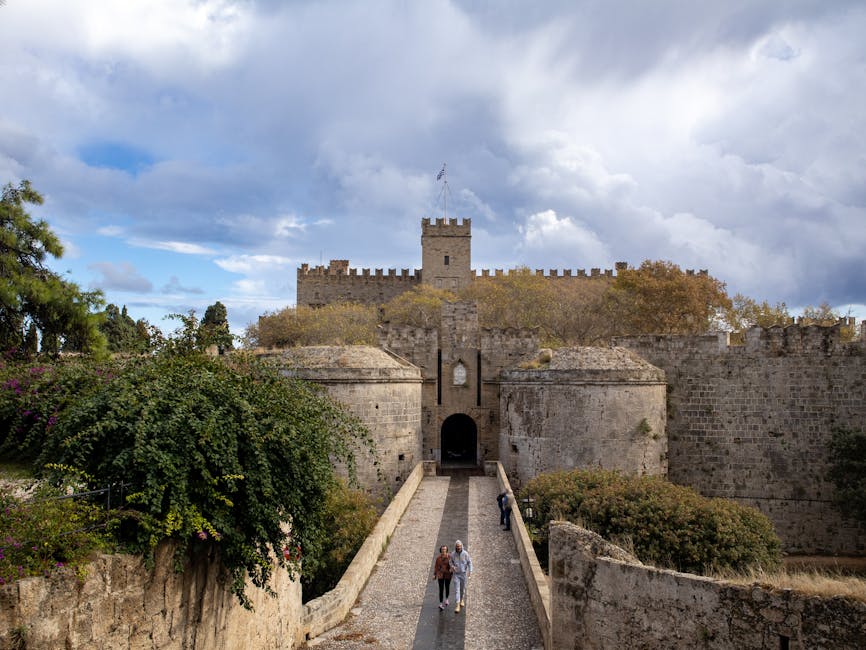
Practical Information: Opening Hours, Prices, How to Get There and Best Times to Visit
Opening hours (indicative): the Acropolis archaeological site is generally open every day. Typical hours: April to October 08:00–20:00; November to March 08:00–17:00. These times may be adjusted for seasonality, national holidays or excavation and restoration work. For a relaxed visit, favour mornings and late afternoons outside the peak season.
Prices (indicative): entrance to the Acropolis archaeological site: around €6.00 for a full-price ticket; reduced price (EU students, seniors, etc.): about €3.00. There is occasionally a combined ticket covering several Rhodes sites (Palace of the Grand Master, Archaeological Museum, Acropolis), with prices typically between €8.00 and €12.00 depending on season and promotions. Temporary exhibitions and nearby museums may have separate fees.
Getting there: from the Old Town, the most straightforward walk starts at Hippocrates Square and follows Ippokratous Avenue westward. Foot access is direct: a 10–20 minute walk depending on where you start. By car: set your GPS to “Monte Smith Hill, 85100 Rhodes”; parking near the site is limited (paid public parking near Kolona/Palace area). Local taxis and city buses serve the area but may not go all the way to the top — expect an additional 5–15 minute walk in some cases.
Best times to visit: spring (April–May) and autumn (September–October) offer pleasant temperatures (around 18–26 °C), soft light and moderate crowds. Summer (July–August) is hot and busy: go early in the morning or wait for sunset to enjoy the view without the midday heat. Sunrise on Mount Smith, with Mandraki Bay bathed in golden light, is a memorable and usually quieter experience.
Suggested visit flow: start early to enjoy the morning cool. First explore the upper remains (Temple of Apollo, viewpoints), then descend toward the Ancient Theatre and Stadium to appreciate the site’s topography. Allow 1.5 to 3 hours depending on your interest in archaeology and photo stops. Bring a map or download an offline map app, as signage can sometimes be sparse.
Recommended gear: comfortable walking shoes (ground is uneven and sometimes rocky), hat and sunscreen, a water bottle (water points are scarce on-site), and a small bag to protect your camera from sea spray and dust. In summer, prioritize morning or late afternoon visits. For photography, a wide-angle lens will capture the panorama and ruins, while a telephoto lens helps isolate sculptural details.
Safety and conservation: respect barriers and protective signage around the ruins. Do not climb on column fragments or remove stones — archaeological sites are protected under Greek law and fines may apply. If you notice damage, report it to the Rhodes Antiquities Directorate or the park office.
Accessibility: Mount Smith’s terrain and surface conditions make access partially challenging for visitors with limited mobility. Some areas are reachable via stabilized paths, but other parts — such as the stadium seating or theatre slopes — require mobility. Contact the Rhodes Tourism Office (Rhodes Tourism Office, address: Eleftherias Square/Plateia Eleftherias, 85100 Rhodes) about temporary arrangements or assisted visits.
Guided tours and audio guides: guided tours in French, English or Greek are often available from licensed local guides; prices vary (typically €15–40 per person depending on duration and inclusions). Informational brochures and sometimes audio guides are provided at the entrance during high season. Hiring a local guide greatly enriches understanding of the ruins (construction techniques, epigraphic dedications, changes over time).
Click here to book your guided Old Town tour of Rhodes
On-Site Tips: Visit Route, Safety, Photography and Accessibility
Suggested visit flow: start early to enjoy the morning cool. First explore the upper remains (Temple of Apollo, viewpoints), then descend toward the Ancient Theatre and Stadium to appreciate the site’s topography. Allow 1.5 to 3 hours depending on your interest in archaeology and photo stops. Bring a map or download an offline map app, as signage can sometimes be sparse.
Recommended gear: comfortable walking shoes (ground is uneven and sometimes rocky), hat and sunscreen, a water bottle (water points are scarce on-site), and a small bag to protect your camera from sea spray and dust. In summer, prioritize morning or late afternoon visits. For photography, a wide-angle lens will capture the panorama and ruins, while a telephoto lens helps isolate sculptural details.
Safety and conservation: respect barriers and protective signage around the ruins. Do not climb on column fragments or remove stones — archaeological sites are protected under Greek law and fines may apply. If you notice damage, report it to the Rhodes Antiquities Directorate or the park office.
Accessibility: Mount Smith’s terrain and surface conditions make access partially challenging for visitors with limited mobility. Some areas are reachable via stabilized paths, but other parts — such as the stadium seating or theatre slopes — require mobility. Contact the Rhodes Tourism Office (Rhodes Tourism Office, address: Eleftherias Square/Plateia Eleftherias, 85100 Rhodes) about temporary arrangements or assisted visits.
Guided tours and audio guides: guided tours in French, English or Greek are often available from licensed local guides; prices vary (typically €15–40 per person depending on duration and inclusions). Informational brochures and sometimes audio guides are provided at the entrance during high season. Hiring a local guide greatly enriches understanding of the ruins (construction techniques, epigraphic dedications, changes over time).
Around Mount Smith: What to See Next and Recommended Places
After exploring the Acropolis, the area offers plenty of options to extend your day. Right nearby is the Municipal Garden of Rhodes, a pleasant spot for a shady picnic. On the way back down into the Old Town, don’t miss the Palace of the Grand Master of the Knights of Rhodes, located in the Old Town at: Platia Ippokratous, Rhodes Old Town, 85100. Opening hours: typically 08:00–20:00 in season; entrance fee roughly €8.00.
The Archaeological Museum of Rhodes is also in the Old Town at Ippokratous Square, Rhodes Old Town, 85100 Rhodes. Estimated hours: 08:00–20:00 in high season; entry around €6.00 (reduced €3.00). The museum places the Acropolis finds in a broader context, with sculptures, ceramics and objects discovered on Rhodes.
For lunch or dinner after your visit, I recommend nearby well-rated spots:
- To Stenaki — Address: Ippokratous 5, 85100 Rhodes. Traditional Greek fare, dishes from €8–12.
- Marco Polo Café — Address: Platia Eleftherias, 85100 Rhodes. Panoramic terrace, coffees and small plates, dishes €6–15.
- Ta Kardasia — Address: Mandraki Harbor area, 85100 Rhodes. Seafood specialties, mains €12–25.
These places offer a good balance of proximity and quality, and some have tables with views over the bay.
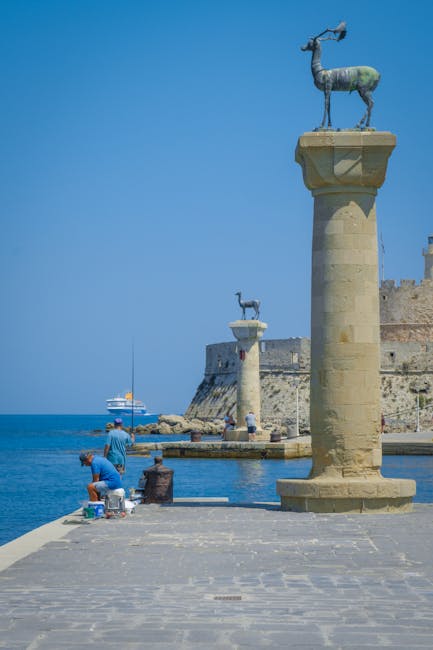
For walkers, the stroll along Mandraki Harbor (Mandraki Harbor, address: Mandraki, 85100 Rhodes) is a must. You’ll see yachts, the old windmills and the famous metal deer that flank the harbour entrance. Continue south along the coast to find quieter beaches or to catch a boat trip to the nearby island of Symi.
Click here to book a boat excursion to Symi Island
Conclusion
Mount Smith and the Acropolis of Rhodes form a heritage duo where dramatic landscapes meet deep history. Between ancient remains (Temple of Apollo, Ancient Theatre, Stadium), sea panoramas and shaded avenues, the site delivers a complete experience that satisfies both history lovers and scenery seekers. Visiting Mount Smith also helps you understand Rhodes’ strategic position in antiquity: an island crossroads opening onto eastern Mediterranean sea routes, whose monuments still speak to us today.
Practically speaking, the site’s immediate proximity to the Old Town makes it easy to plan a half-day combo: morning on Mount Smith, lunch in the Old Town, afternoon at the Archaeological Museum or the Palace of the Grand Master. Check hours and prices before you go, adapt your pace to the weather (avoid midday heat in summer) and follow conservation rules at the archaeological sites. For photographers and contemplatives alike, sunrise and sunset remain the most magical moments — the view over Mandraki and the horizon adds an almost mythic dimension to the visit.
Finally, bear in mind that every stone tells a story: from religious rites to civic events, from stadium races to theatre performances, Mount Smith is a living place of memory. Respect this heritage, take the time to listen and observe, and you’ll leave not only with spectacular images but also with a deeper understanding of Rhodes and its historical role. Safe travels and happy discoveries on Mount Smith!