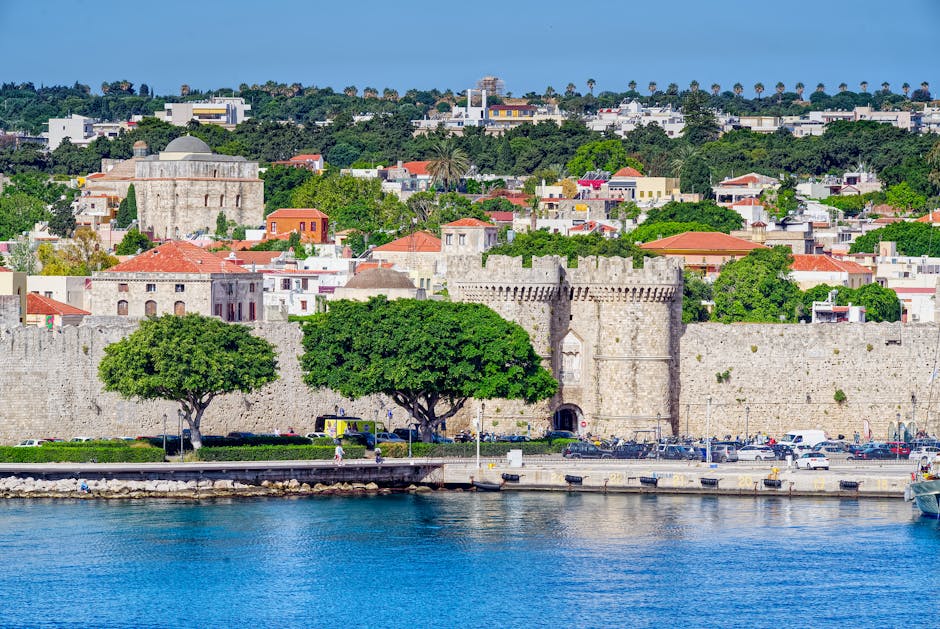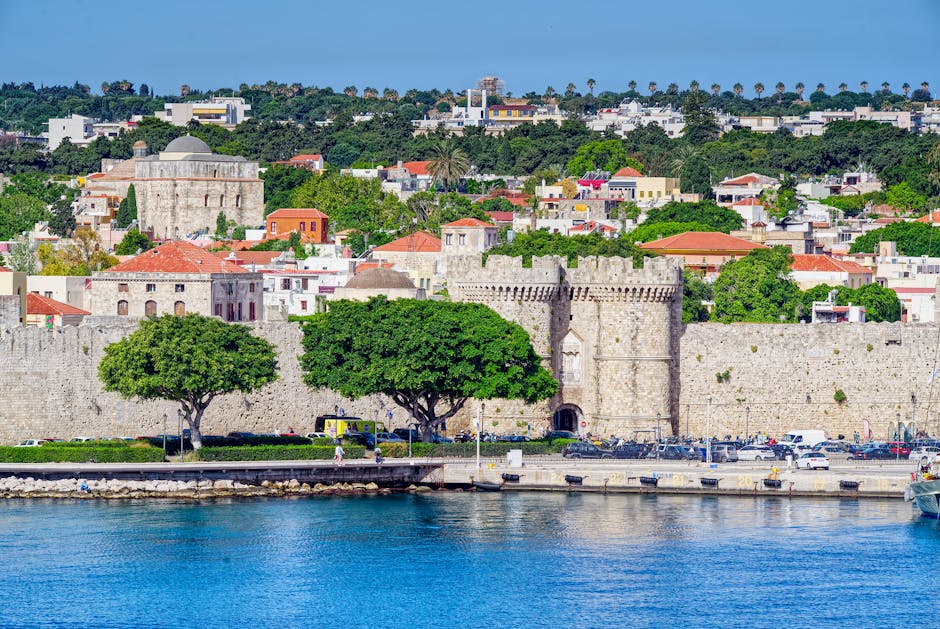





Introduction: A Deep Dive into the Secrets of Rhodes’ Monte Smith Acropolis
Perched on Monte Smith hill to the northwest of Rhodes’ Old Town, the ancient acropolis is a site where layers of history lie open to the sky. Less famous than some other Mediterranean ruins, this acropolis nevertheless hides archaeological treasures and jaw-dropping views that trace Rhodes’ long history — from the Archaic and Hellenistic periods through Byzantine and medieval influences. Walking among the remains of the Temple of Apollo, following the sandy alignment of the ancient stadium, or sitting on the odeon’s steps, you’ll sense an unbroken thread with the past: this was a place for worship, athletic contests, musical performances and civic ceremonies. Every stone tells a story, and every ridge offers a view of the Aegean and the harbour of Mandraki.
This detailed guide aims to reveal not only the architectural and historical background but also practical, up-to-date information to help you plan your visit: exact addresses, opening hours, admission prices in euros, routes, photo tips and local tricks to avoid the crowds. Whether you’re a curious traveler, a photographer chasing the perfect sunset, an archaeology student or someone who enjoys cultural walks in the open air, you’ll find keys here to appreciate every corner of the site.
We’ll also share well-kept little secrets: the best angle to make the columns pop against a golden sky, the perfect hour for a panorama of the Old Town and Mandraki harbour, readable inscription fragments that hint at panhellenic games and votive offerings, and shaded spots where you can rest out of the sun. Monte Smith is a small historical microcosm where the mix of coastline, wind and limestone has preserved a fragile heritage that deserves respect and attention.
Finally, we’ll include practical recommendations — parking, public transport, combined tickets, what to bring — and suggestions for extending your discovery in the immediate area, such as the Archaeological Museum of Rhodes, the Palace of the Grand Master and the Mandraki harbour promenade. Lace up your shoes, grab a hat and bring your curiosity: let’s uncover the secrets of Monte Smith’s ancient acropolis.
 Click here to book a private walking tour of Rhodes
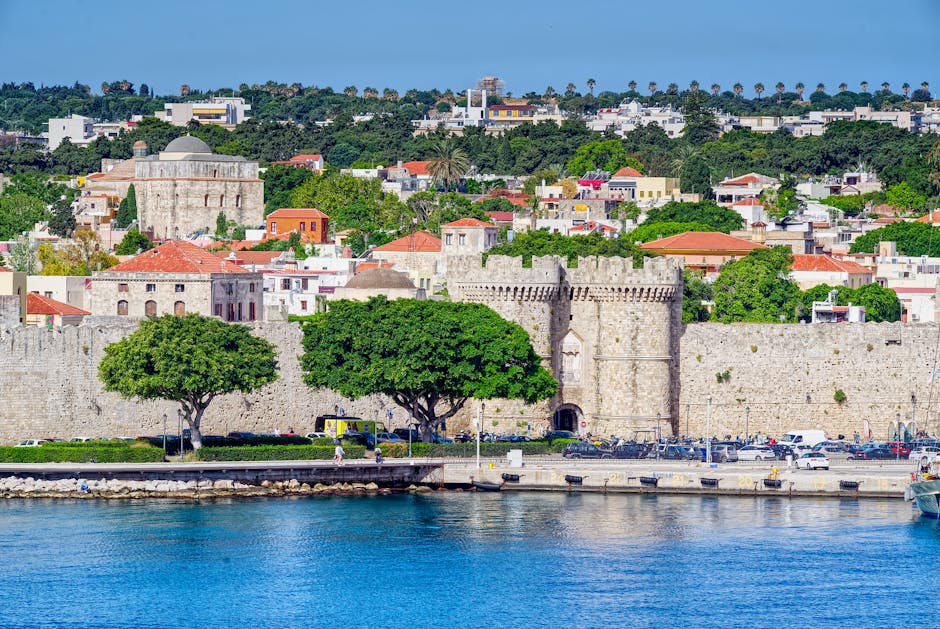
History and Timeline: From Archaic Worship to Modern Uses
The Monte Smith acropolis in Rhodes served as a religious and civic center from the Archaic period (7th–6th centuries BCE) through the Greco-Roman era and beyond. The hill was dedicated to the island’s protective deities, notably Apollo and Athena Polias. The Temple of Apollo — of which foundations and a few columns remain — highlights the importance of that cult in Rhodes’ religious life. Hellenistic structures show technical and artistic refinement that reflect Rhodes’ prosperity and reach when the island was a key commercial hub in the eastern Mediterranean.
During the Hellenistic and Roman periods, the acropolis was equipped with a stadium for athletic games — the Ancient Stadium of Rhodes — and an odeon, a small hall for concerts and speeches. These facilities point to a vibrant urban life where athletic competitions and religious festivals shaped the city’s calendar. In late antiquity and the early Middle Ages the hill lost some of its religious functions but continued to be inhabited and used, sometimes as a quarry to supply stone for other buildings.
Modern excavations, begun in the late 19th century and intensified in the 20th, have helped reconstruct the site’s topography and uncovered inscriptions, statue bases, fragments of painted stucco and displaced architectural elements. Notable finds include remains of the Temple of Athena Polias and fragments of ritual altars. Archaeologists also discovered mosaic fragments and drainage structures that point to careful urban planning.
Today the acropolis is protected by the Greek Ministry of Culture and stands as a heritage site for both visitors and locals. The site illustrates the superimposition of eras and the dialogue between nature and human work: weathered stones record the passage of time, while the panorama over the bay and harbour anchors the hill in the maritime landscape that fueled Rhodes’ prosperity.
Click here to discover Rhodes’ Old Town with a guide
Visiting Today: Address, Opening Hours, Prices and Practical Routes
Exact address: Acropolis of Monte Smith, Monte Smith Hill, Old Town, Rhodes 85100, Greece. For GPS or taxi accuracy, use: Monte Smith Archaeological Site, 85100 Rhodes, Greece — landmark: the hill northwest of the Medieval Old Town.
Opening hours (indicative and subject to seasonal changes): April–October: 08:00 – 20:00; November–March: 08:00 – 17:00. It’s best to arrive early (at opening) or late afternoon for softer light and to avoid midday heat and the largest guided groups.
Admission (approximate prices in euros; check on site or via the Greek Ministry of Culture for updates): Single entry to the acropolis: €6 (full price); reduced: €3 (students, EU seniors, children under conditions). Combined ticket “archaeological sites of Rhodes” covering multiple sites (Palace of the Grand Master, Archaeological Museum of Rhodes, other ruins): about €12–15. Museums and the Palace have separate prices and opening times; check official notices at each entrance.
How to get there: From the Medieval Old Town, the walk up to Monte Smith is accessible via Ippoton Street and footpaths leading to the hill — allow 10–20 minutes depending on your starting point. By car or taxi: say “Monte Smith” or “Acropolis of Rhodes”; from Mandraki harbour the drive is 5–10 minutes (taxi fares typically ~€6–10 depending on time and season). Local bus: some routes stop near the Old Town; get off at “Old Town / Rhodes Town” and walk to the hill. Parking is limited around the Old Town; it’s often easier to park near the medieval centre and walk up.
Practical access tips: wear comfortable, grippy footwear — surfaces can be uneven and rocky. Bring water, a hat and sunscreen in summer. Avoid large bags: much of the site is open and paths are narrow. Respect fenced-off areas and don’t climb on painted or fragile ruins. Photographers: for a sweeping panorama of the bay and harbour head to the northwest edge of the hill at sunset — the column silhouettes are especially photogenic there.
Key Monuments and Points of Interest: Temple of Apollo, Temple of Athena Polias, the Odeon and the Ancient Stadium
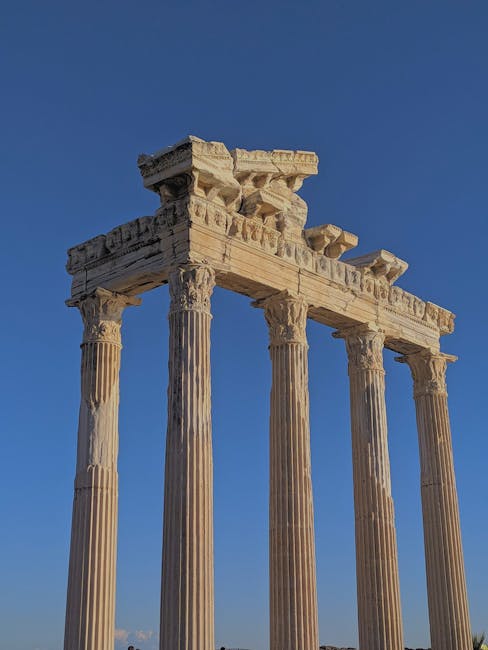
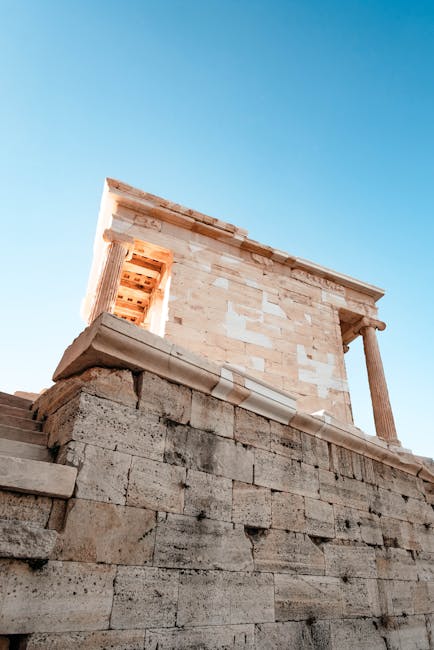
The Temple of Apollo, on the western slope of the hill, is one of the most emblematic structures. Today you mainly see foundations, a few column bases and sculpted fragments. The temple’s dimensions and its orientation toward the sea suggest processions that took place with the bay as a dramatic backdrop. The primary building material was local limestone, sometimes faced with marble slabs or decorated with imported stone during wealthier periods.
The Temple of Athena Polias once stood at the summit of the acropolis. What remains are bases and altar fragments; excavations revealed votive offerings and honorary inscriptions carved on marble bases. The temple’s strategic position, overlooking the sea and the town, reflected Athena’s protective role over the city and its inhabitants.
The Ancient Stadium of Rhodes, lower on the hillside, still preserves the outline of its track and seating areas. While some surface stones have been moved, the overall shape remains readable — an oval track for races and exercises. In antiquity these competitions were part of civic festivals, and the stands welcomed citizens and visitors to the events. The stadium’s layout and acoustics also made it suitable for certain public ceremonies.
The Odeon of Monte Smith is a semicircular structure meant for musical performances, readings and orations. The rows of seats and the stage were arranged to create an intimate connection between artists and the audience. Today you can still pick out the stone blocks that formed the seats and the configuration of the cavea. Archaeologically, the odeon sheds light on Rhodes’ cultural life, the forms of performance and the local patrons who funded these constructions.
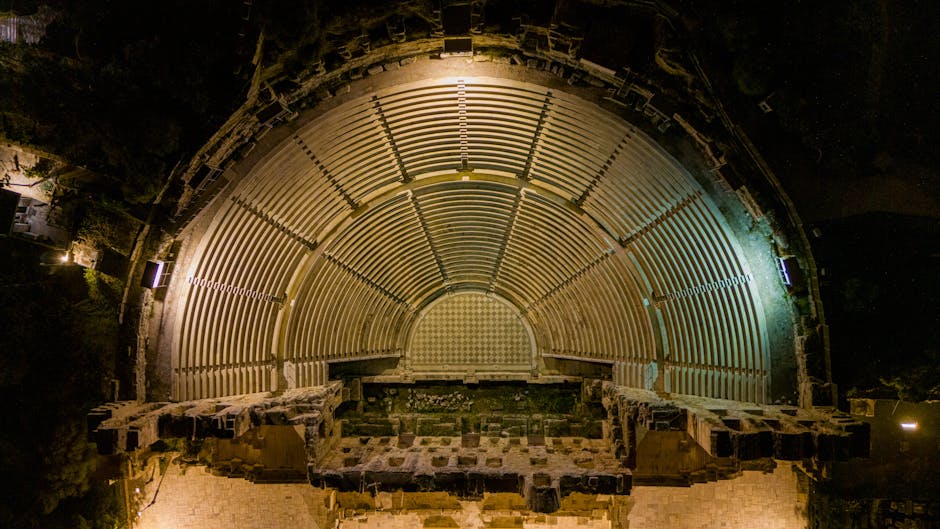
Other notable elements: statue bases with inscriptions, altar fragments and remains of ancient drainage. These finds help explain hydraulic organization, ritual practices and the commemoration of notable individuals. A must-see area is the foundations zone, where anyone who knows how to read the markings can spot traces of votive inscriptions and ancient graffiti recounting victories, offerings and craftsmen’s names.
Interpretation Tips and Observation Secrets for the Curious Visitor
Seeing the acropolis with an informed eye changes the experience: it’s not just about stones, but about reading the palimpsest of history engraved in the landscape. Start by noting the temples’ orientations — principal façades were often aligned to specific solar or maritime axes. The Temple of Apollo, for example, faces the open sea and catches the morning light; visiting at dawn lets the reliefs come alive under a soft angle.
Another tip is to find the “listening spots”: near the odeon sit on a step and pay attention to the wind and the sea sounds; you’ll better appreciate how acoustics shaped performances. Also get close to statue bases and inscription fragments. Archaeologists have sometimes reconstructed names and dedications that reveal local patronage — families commissioning monuments to build status.
Photographers: sunrise angles cast long shadows and warm tones on the columns; at sunset the ruins stand out against richer skies. Tip: use a short telephoto to isolate sculpted details and tool marks. Bring a small notebook to jot down inventory numbers from site plaques — these will let you look up the corresponding records later at the Archaeological Museum of Rhodes.
Don’t overlook landscape details: the Mediterranean vegetation (mastic, rosemary, olive) is integral to the site and helps understand ancient ecology. Follow preservation rules: don’t move fragments, don’t take stones home and avoid trampling protected grassy areas. If you meet archaeologists or local guides, strike up a conversation — their anecdotes and recent finds often unlock fresh insights into the site’s story.
Click here to book a bespoke photo session in Rhodes
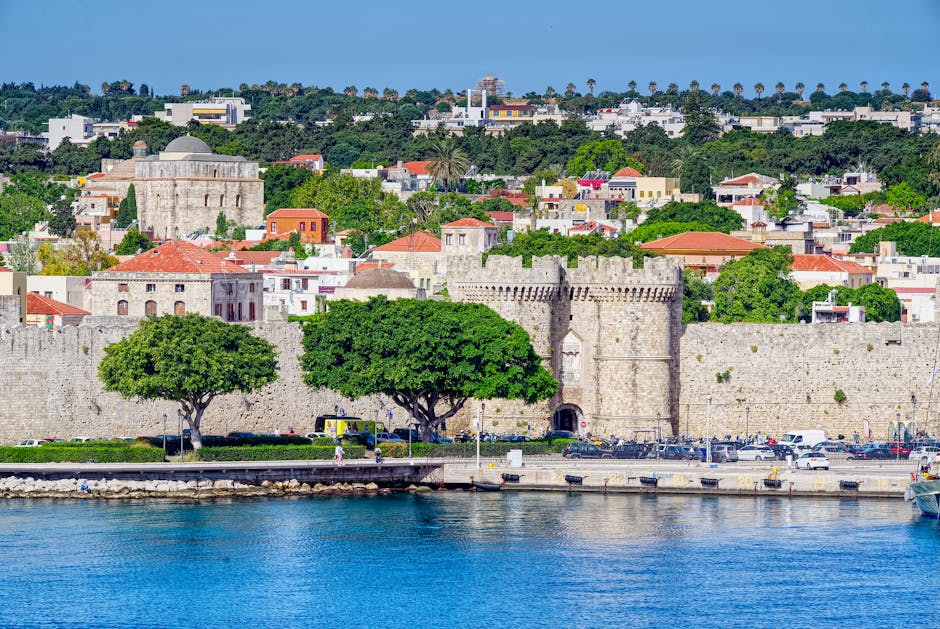
Extend the Visit: Museums, Restaurants, Combined Routes and Suggested Itineraries
After Monte Smith, continue your exploration with complementary visits to deepen your understanding of Rhodes. Archaeological Museum of Rhodes — Address: Palace of the Grand Master (Palace of the Grand Master), Ippoton 2, Rhodes 85100, Greece. Opening hours: generally 08:00 – 20:00 in season; admission: around €8 (full price) with reductions for students and seniors. The museum displays sculptures, mosaics, inscriptions and objects found at Monte Smith and across the island.
The Palace of the Grand Master — a short walk from Monte Smith — is worth visiting to learn about Rhodes’ knightly chapter. Address: Rhodes Old Town, 85100 Rhodes. Hours and prices vary; it’s often included in combined passes with the museum and other sites.
Where to eat nearby: several Old Town eateries serve local cuisine. One practical recommendation: Taverna To Steno (local example), located near Sokratous Street in the Old Town — traditional dishes typically cost €10–18 per person. Food tip: try moussaka, the fresh fish of the day and Rhodian meze paired with a local wine. For a coffee break, try the terraces overlooking Mandraki harbour: cappuccino and local pastries from about €3.
Recommended combined routes: sunrise at Monte Smith to visit the temples, then head down to the Archaeological Museum of Rhodes to deepen what you’ve seen; spend the afternoon wandering the Medieval Old Town (ancient gates, the Street of the Knights); in the evening stroll along Mandraki harbour to see the windmills and the Little Venus. If you have a full day, consider a boat trip to nearby Symi departing from the harbour — fares and schedules vary seasonally.
Click here to book a Symi island trip with pickup
Click here to take a boat excursion to Symi and Panormitis
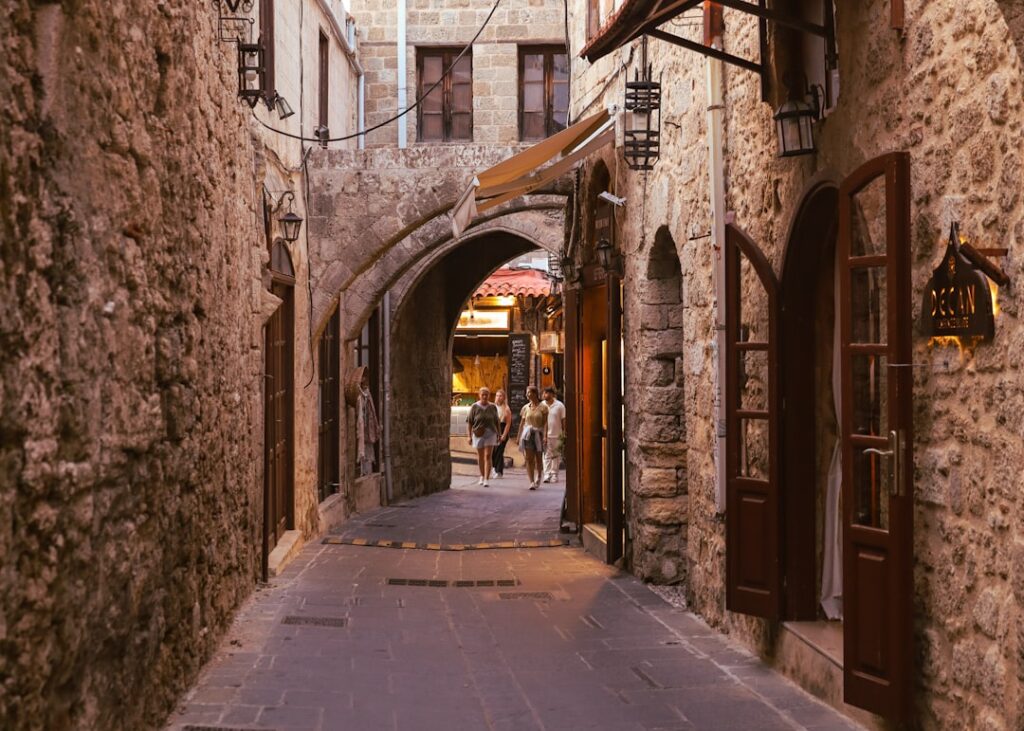
Local practical tips: book Palace and Museum tickets in advance during high season (July–August). Taxis on the island often operate by set fares; agree the price beforehand if the meter isn’t used. For a responsible souvenir, favor local crafts shops in the Old Town over mass tourist stalls — you’ll find pottery, locally made coral jewelry reproductions and traditional textiles.
Conclusion: Why Monte Smith’s Acropolis Should Be on Your Rhodes Itinerary
The ancient acropolis of Monte Smith in Rhodes combines history, seascapes and Mediterranean atmosphere. Less crowded than larger ancient complexes, it offers a more intimate experience suited to careful observation and contemplation. The remains of the Temple of Apollo, the Temple of Athena Polias, the odeon and the stadium tell of a city that balanced worship, competition and culture. Visiting Monte Smith brings into tactile focus the continuity of uses and the way the landscape shaped Rhodes’ civic and religious life through the centuries.
Practically, the acropolis lends itself to short but rich visits: in a well-organized morning you can see the main monuments, enjoy prime photography light, then deepen your knowledge at the nearby museum. The practical information here — address, hours, prices, access tips and photography pointers — will help you make the most of your stop. It’s also vital to stress site respect: these stones are fragile, and reading the informational panels will enrich your experience.
Finally, every visitor can take home a singular memory: the wind’s song in the odeon’s steps, the column silhouettes at sunset, an inscription spotted on a statue base, or a panoramic view of Mandraki bay. Monte Smith’s acropolis is more than a backdrop for photos — it’s a place for sensory experience and historical learning. For archaeology enthusiasts and sightseers seeking great views alike, Monte Smith is an essential stop on any Rhodes itinerary.
Before you go, a few final tips: check current hours and prices with the Hellenic Ministry of Culture or Rhodes tourist information offices; prefer cooler times of day and bring water; respect preservation rules. By doing so you’ll help protect this millennia-old heritage and enrich your trip with an authentic, lasting experience.