





Introduction
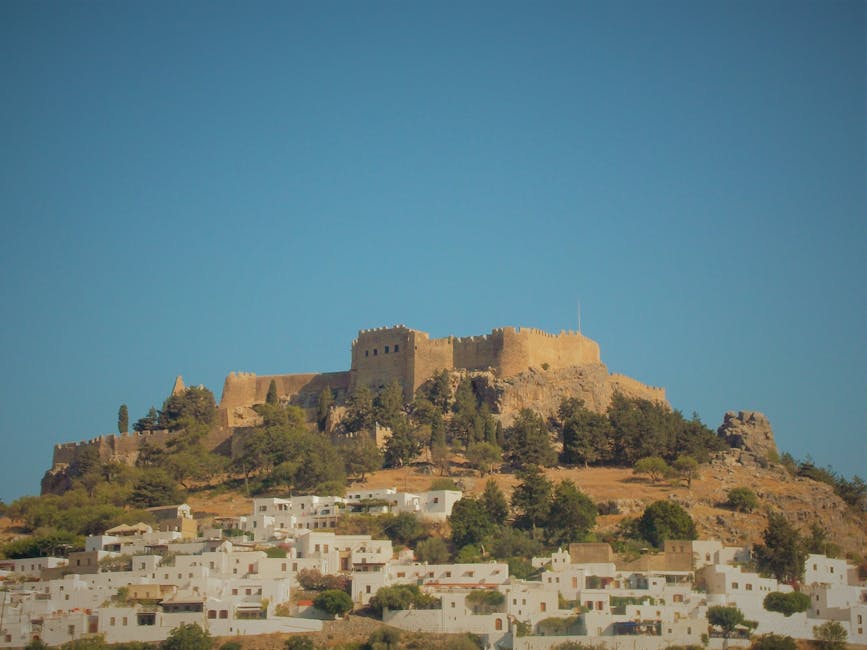
The Monte Smith Acropolis in Rhodes (Acropolis of Monte Smith) is one of those places that compresses millennia of history, dramatic geography and an unforgettable sensory experience. Perched on a hill overlooking the city of Rhodes and the harbour, this ancient acropolis offers not only archaeological remains — a theatre, a stadium and sacred sites — but also breathtaking views over the Aegean Sea, the medieval Old Town and the island’s eastern coast. Visiting the Monte Smith Acropolis places you at the crossroads of ancient Greek civilization, medieval occupations and a lively modern tourist scene.
This quick guide, written for curious and discerning travellers, takes a practical yet thorough approach: how to get there, which parts of the site to prioritise, current opening hours and entrance fees, recommended behaviour on site, and tips to make the most of a half-day or full-day visit. I include exact addresses and on-the-ground info to avoid surprises: the acropolis is located at Monte Smith, Rhodes 851 00, Greece — an easy landmark to plug into maps apps. The archaeological site brings together several distinct areas: the ancient theatre, the stadium, sanctuaries and various remains scattered across the slopes and hilltop.
Beyond the strictly practical, this guide aims to be immersive: the crackle of old stones underfoot, the smell of thyme and rosemary growing in the cracks, the hot Meltemi wind sweeping the hill in summer. I also share local tips: the best times for photography, where to find shade in summer, nearby restrooms and water points, and walking connections to other major sights like Rhodes Old Town and the Archaeological Museum. Prices are shown in euros and reflect typical charges at the island’s archaeological sites (with standard/reduced rates and combined tickets), and opening hours change with the seasons.
Finally, you’ll find advice for travellers mindful of sustainability and heritage protection: respect barriers, avoid drone photography where prohibited, and act carefully around fragile remains. Whether you have a few hours or a full day, this guide will help you make the most of visiting Monte Smith Acropolis with clear directions and recommendations for a comfortable, enriching and memorable outing.
1) Getting to Monte Smith Acropolis: addresses, routes and access
The Monte Smith Acropolis sits on Monte Smith hill in the city of Rhodes. GPS-friendly address: Monte Smith, Rhodes 851 00, Greece. This reference covers the pedestrian entrances and the paths that climb to the summit where the main remains are concentrated. If you’re in the Old Town (Rhodes Old Town), the walk up is short and pleasant: allow 20–30 minutes on foot from the Gate of St. Nicholas (Porta di San Nicola) heading northwest along the streets toward the sea.
Transport options:
- On foot: from Rhodes Old Town follow the signs to « Monte Smith / Acropolis. » Recommended route: Hippocrates Square (Plateia Ippokratous) → Odos Sokratous → ascent into the park. Expect a 15–30 minute walk depending on where you start.
- Local bus: urban lines serving the harbour area and Kallithea stop nearby; ask the driver for the « Monte Smith » or « Acropolis » stop. Local fares: roughly €1.50–€2.00 per ride (seasonal variations apply).
- Taxis: hail one from the harbour or central square. Short fare from central Rhodes: around €4–€8 depending on traffic and luggage.
- Car: if you rent a car, park in public lots around the harbour or along Akti Sachtouri avenue and walk up. Useful GPS coordinates: 36.4550° N, 28.2190° E (approximate Monte Smith summit).
Accessibility: paths are gravel and include ancient steps. Full wheelchair access is limited; some areas can be approached but the summit and theatre are not fully accessible. Wear sturdy shoes with good grip, carry water and a hat in summer. Paths are shaded by a few pines and cypresses, but sun exposure is still significant.
2) Detailed description of the main remains: theatre, stadium, sanctuaries
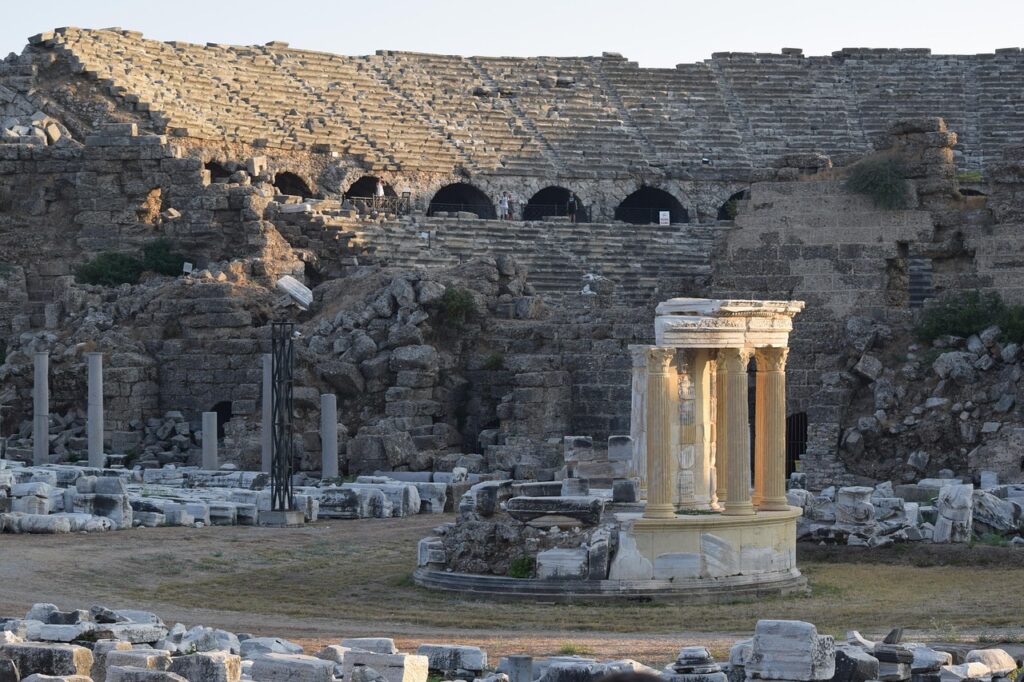
The Monte Smith Acropolis is an archaeological complex made up of several distinct structures, each telling a different chapter of Rhodes’ past. The site is dominated by three major elements: the ancient theatre, the stadium and various sanctuaries and public buildings. The remains have been partially restored and allow a direct reading of the ancient urban layout.
The Ancient Theatre of Rhodes sits on the hill’s north-eastern slope. Built in the Hellenistic period and later modified in Roman times, it once held several thousand spectators. Today, only the stone seating survives, but the sightlines and acoustics remain impressive. Its semicircular form overlooks the valley and provides a natural stage facing the sea. Standing in the orchestra centre, you can feel the scale of the place and understand why theatres were central to civic life.
The Ancient Stadium of Rhodes lies on the south-western flank of the hill. Oriented along the usual axis for ancient stadia, it contained an oval track surrounded by seating. Traces of retaining walls, entrances (vomitoria) and row alignments are visible; parts have been cleared and stabilised to make the layout easier to read. It’s a perfect spot to imagine the athletic contests and public ceremonies that once animated the city.
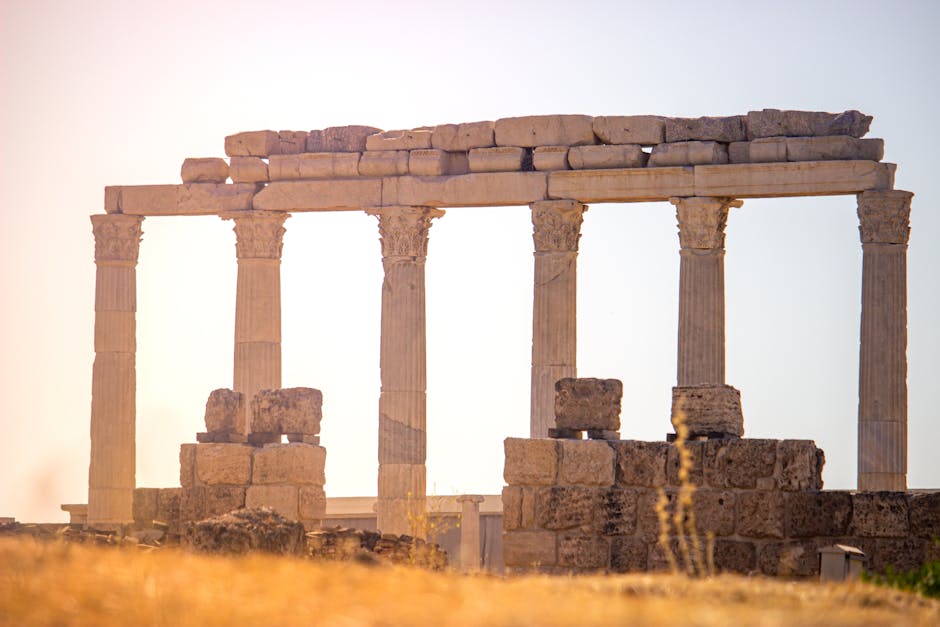
Among the sanctuaries and smaller buildings you’ll find remains of altars, statue bases and fragments of public walls. The stones sometimes bear inscriptions or tool marks that reveal construction techniques. These scattered elements help reconstruct the summit’s religious and civic importance: the acropolis hosted cults and communal gathering places for the people of Rhodes.
Archaeology lovers should take time to study the details: stone joints, metal fastening holes, traces of plaster. Check the explanatory panels on site (usually in Greek and English) that outline the chronology and function of the different structures.
3) Opening hours, prices and practical info to plan your visit
Before you go, it’s essential to check current opening times and fees. Archaeological sites in Rhodes generally adjust hours to the tourist season. Here’s a practical summary to use as a reference:
- Seasonal hours:
- High season (April–October): typically 08:00 – 20:00. Last entry often 19:30.
- Low season (November–March): typically 08:00 – 17:00. Closures possible due to weather or public holidays.
- Entrance fees (indicative): Monte Smith is listed among the island’s archaeological sites; fees may be:
- Standard adult ticket: around €6.00
- Reduced (EU students, seniors 65+): around €3.00
- Free entry: children under 18 (conditions apply), holders of certain cultural cards (check locally)
- Combined ticket (visiting multiple archaeological sites in Rhodes): about €12.00–€15.00 depending on season
- Payment methods: some sites only accept cash; increasingly, cards are accepted. Bring some euros in cash to avoid surprises.
- Ticket office and panels: there is a welcome point with explanatory panels in English and Greek. In high season local guides offer paid tours (roughly €30–€60 for a private group depending on duration).
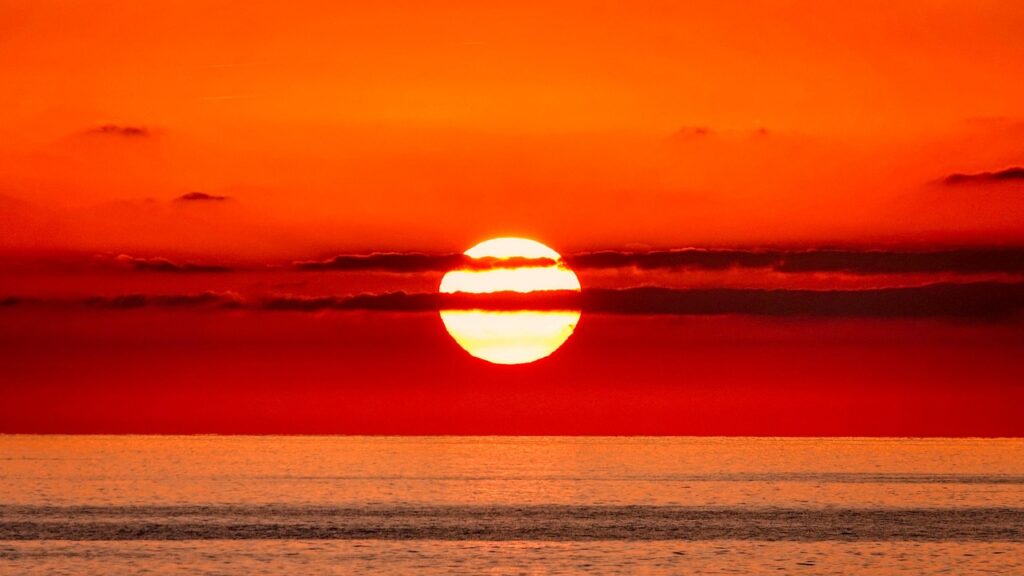
Practical tips: arrive early to avoid heat and crowds, especially in July–August. The site is also stunning at sunset — the low light brings out the stone textures and bathes the sea in warm tones — but expect more visitors then. If you want to skip paid entry (when some peripheral areas remain freely accessible), take the lower path to enjoy panoramic views without necessarily entering all excavated areas.
4) Photo tips, best viewpoints and ideal times
Photographing Monte Smith Acropolis offers rich visual possibilities. Key advice includes paying attention to light quality, framing to include sea and town, and managing people in your shots. Here’s a practical guide to get the best images.
Recommended times:
- Dawn (06:00–08:30): cool, golden morning light softly tones the stones. Few visitors, perfect for wide shots of the theatre and the town below.
- Late afternoon / sunset (18:00–20:30, season-dependent): warm light highlights textures and turns the Aegean shades of orange and pink. Silhouettes of the Old Town and moored boats make striking compositions.
- Midday: strong light and high-contrast shadows — useful for architectural detail but tougher for exposure control.
Viewpoints and compositions:
- Monte Smith summit: 360° panoramas — ideal for wide-angle landscape shots. Use a telephoto to isolate distant elements like villages or ships in the harbour.
- Theatre seating: diagonal perspectives on the tiers and stage, great for conveying the monument’s scale.
- Stadium edge: low-angle compositions emphasise the track and create a horizon line with the sea behind.
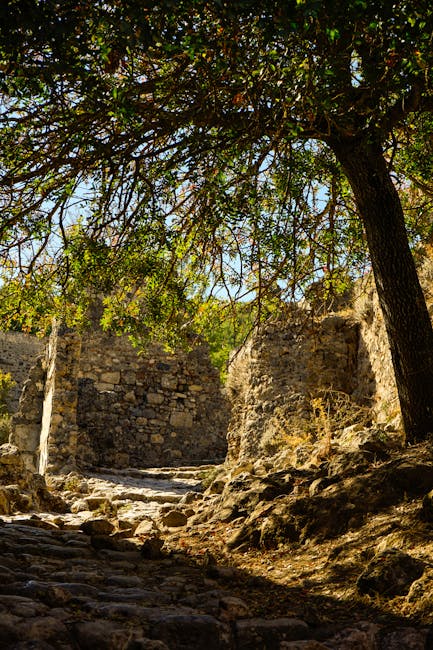
- Pine-lined paths: backlit shots with sunbeams filtering through trees for a Mediterranean atmosphere.
Gear and technique:
- Wide-angle lens (16–35 mm) for panoramas and the theatre interiors.
- Telephoto (70–200 mm) for carved details and isolating distant subjects.
- Light tripod for sunset shots (if allowed); check site regulations.
- Polarising filter to deepen the blue of the sea and cut reflections.
Photography rules and ethics: respect barriers. Some sensitive areas prohibit close photography or drone use — if you plan to fly a drone, check with local authorities and secure the necessary permits. Never move stones to « improve » a composition; such actions damage heritage.
5) Around the acropolis: services, museums and complementary routes
A visit to Monte Smith Acropolis fits perfectly into a broader day of discovery in Rhodes. Several nearby sites and services are worth your attention. Below is a structured list of options to extend your exploration.
Must-see sites and museums:
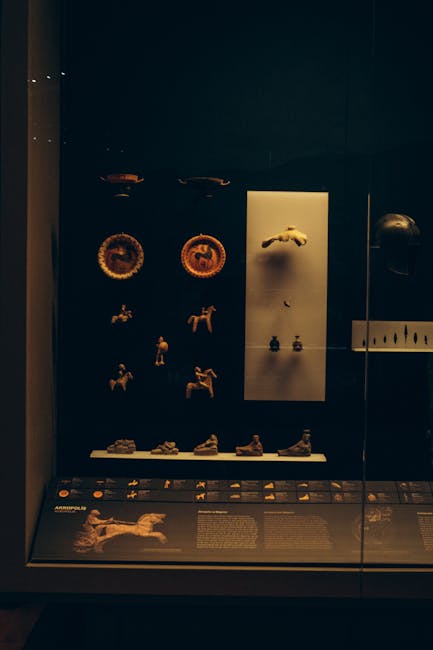
- Archaeological Museum of Rhodes — located in the Old Town (approximate address: Rhodes Old Town, Plateia Ippokratous / Sokratous area, Rhodes 851 00). The museum houses sculptures, stelae and finds uncovered across the island, giving valuable context to the remains seen on Monte Smith. Fees: around €6.00 for adults, reductions available.
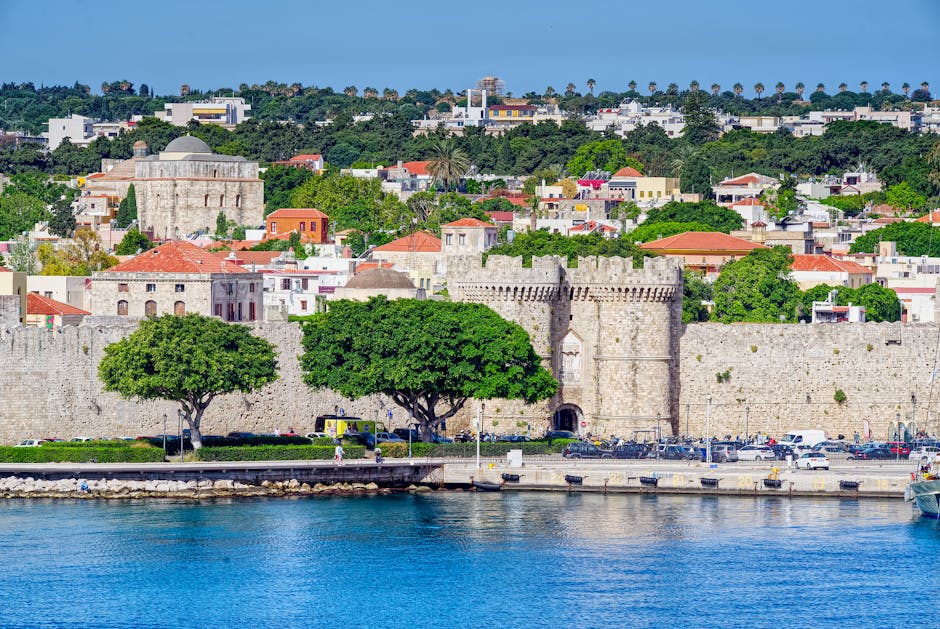
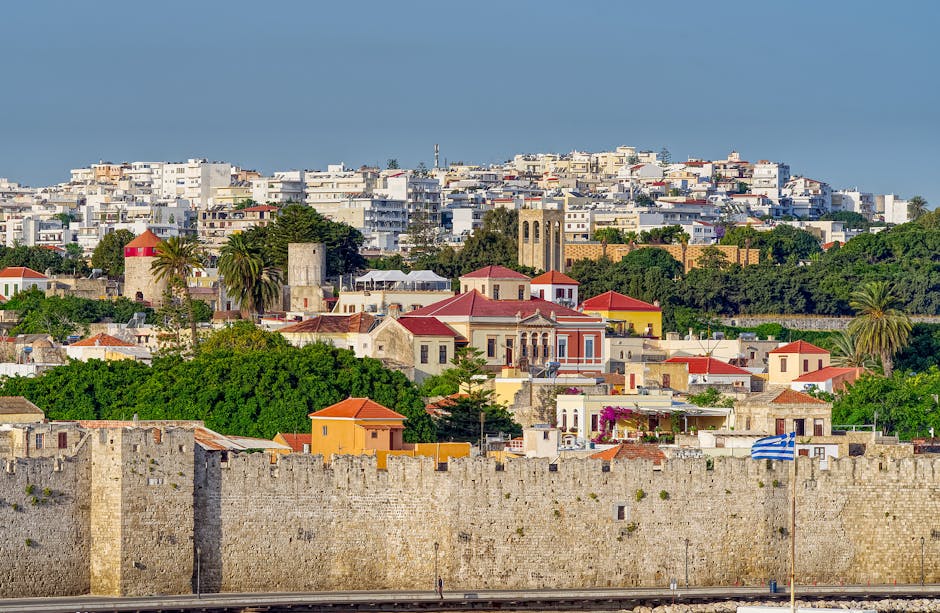
- Palace of the Grand Master of the Knights of Rhodes — in the medieval Old Town, about a 15–20 minute walk from the hill. Address: Rhodes Old Town, Rhodes 851 00. Hours and fares vary — combined tickets with other fortifications are often available.
- Kallithea Springs — address: Kallithea, Rhodes 851 05, Greece. 6–10 km from the hill; a redeveloped spa and seaside complex, great for a swim after your visit. Entry: free or a small fee for some facilities (roughly €3–€5 for access to restored pool areas depending on season).
Practical services:
- Restrooms and cafés: a few cafés and light refreshment spots sit near the park’s lower entrance; selection is limited. For a full meal, return to Rhodes Harbour and the Old Town where there’s a broad choice of restaurants (tzatziki, meze platters, grilled fish).
- Water points: bring a water bottle; fountains may be absent in parts of the site. In summer, heat is intense and dehydration is a real risk.
- Souvenir shops: concentrated at the harbour and in the Old Town; small kiosks may appear at the archaeological site during high season.
Recommended itineraries:
- Morning: start in the Old Town (Palace of the Grand Master), then head up to Monte Smith mid-morning (good light and cooler temperatures).
- Afternoon: descend to the harbour for lunch, then head to Kallithea Springs for a swim and sunset photos.
- Active route: if you enjoy walking, follow the coast south from the hill and join the Akti Sachtouri waterfront promenade for a stroll to the new port.
6) Local tips, safety and good practices to protect the heritage
Respecting an archaeological site means preserving its history. Locals and heritage professionals in Rhodes are committed to conservation. Here are practical recommendations based on local customs and rules.
Behaviour on site:
- Do not climb on fragile structures or move stone fragments. Even a single displaced stone can compromise an excavation.
- Do not write or carve on walls or stones. Graffiti is illegal and destructive.
- Take your rubbish with you. Carry out any wrappers or bottles if bins are full or absent.
- Follow signage and temporary fences. They often protect recently uncovered or unstable areas.
Safety and health:
- Hydration: bring at least 1–2 litres of water per person in summer.
- Shoes and gear: closed, sturdy walking shoes, a hat, sunscreen and sunglasses.
- Weather: in strong wind (Meltemi) or storms, authorities may close parts of the site for safety; heed notices and signage.
Interacting with local guides:
- Support the local economy by hiring a licensed guide for an in-depth visit. Indicative fee: €30–€60 for a private guide (1–2 hours) depending on season and language.
- Contact the local tourist office (Rhodes Municipal Tourism Office, address: Plateia Eleftherias / Municipal Square area, Rhodes 851 00 — check current opening times) for brochures and up-to-date information.
Cultural respect: although the island is very tourism-oriented, certain local practices deserve respect (dress modestly when visiting religious sites, keep a calm demeanour at sacred places). Locals will appreciate it and your interactions will be more rewarding.
Conclusion
The Monte Smith Acropolis in Rhodes is a must-see stop for anyone interested in Mediterranean history, archaeology and sea panoramas. Located in the heart of Rhodes — Monte Smith, Rhodes 851 00, Greece — this acropolis combines ancient remains, marine views and close proximity to the medieval Old Town, offering visitors a rich palette of experiences in one place. This guide has given you clear markers: how to get there (on foot from the Old Town, by local bus or taxi), the main monuments to see (ancient theatre, stadium, sanctuaries), and essential practical info (seasonal hours, indicative fees in euros, photo tips, nearby services).
When visiting the acropolis, favour cooler morning hours or the golden light of sunset for the best photography and more comfortable temperatures. Remember the site is fragile: respect barriers, avoid removing fragments or altering structures, and support the local economy by using licensed guides or patronising nearby cafés and restaurants. To deepen your understanding, combine Monte Smith with the Archaeological Museum of Rhodes, the Palace of the Grand Master and Kallithea Springs — complementary sites that help reveal the island’s historical and cultural richness.
Finally, keep in mind that opening hours and prices can change: before you set off, verify the latest information with the Rhodes tourist office or the on-site welcome points. By respecting the site and preparing for your excursion (water, appropriate footwear, camera, a few euros in cash), you’ll enjoy a memorable and sustainable experience. The Monte Smith Acropolis is not just a collection of old stones — it’s a vantage point across time and civilizations, a lookout over the sea and a place that invites reflection. Safe travels, and make the most of every step, ruin and view this historic Rhodes hill has to offer.