





Introduction — The Faces of Rhodes: Must-See Portraits and Statues
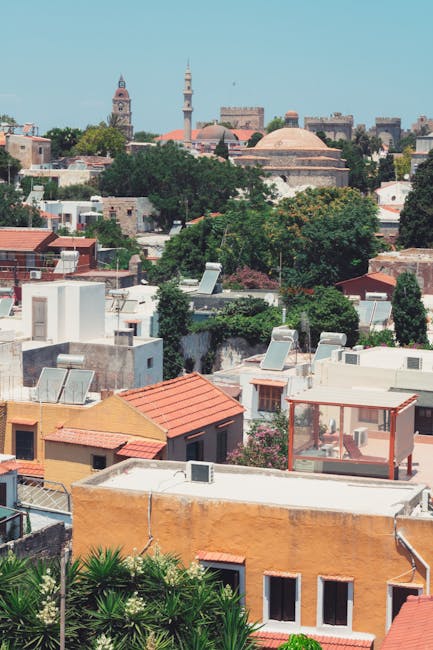
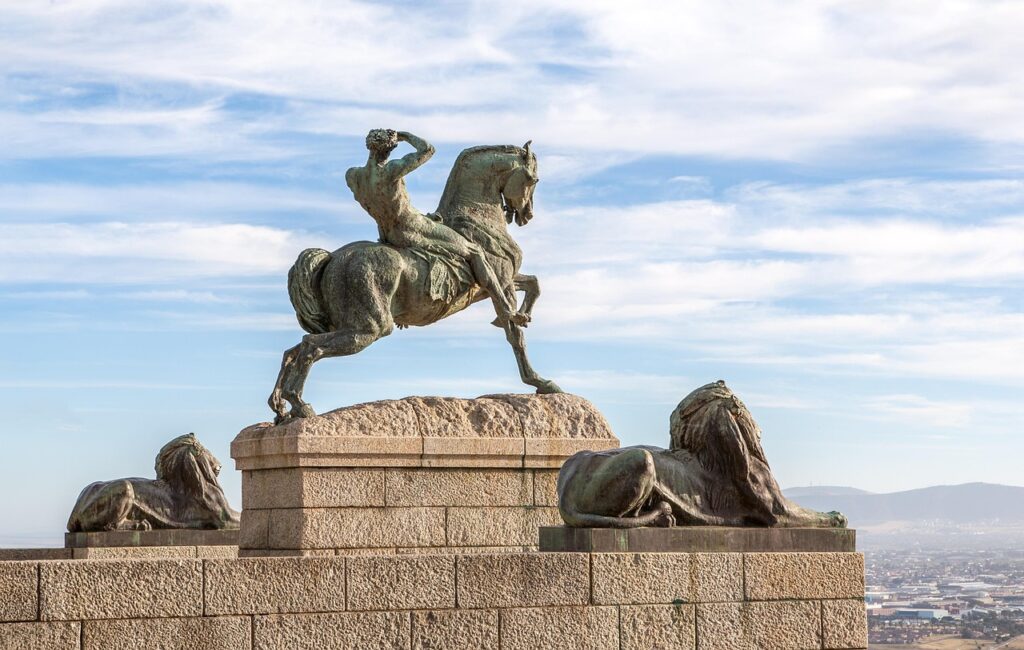
Rhodes is an island of contrasts: stone and sea, a crossroads of empires and a land of myths. Wandering Rhodes feels like walking through a history book carved in stone and metal — faces that tell stories of conquests, saints, local heroes and collective symbols. In this in-depth, professional guide I invite you to explore the “faces” of Rhodes: statues, busts, bas-reliefs and monuments scattered across the large Dodecanese island. Each one is an anchor point for reading local culture, understanding major episodes — from ancient Greece to the Knights of St. John, through the Ottoman era to modern Greece — and for seeing, beneath the fixed surface of the material, a living history.
Rhodes lends itself particularly well to this kind of discovery because its urban centers — the medieval Old Town, Mandraki Harbour, the modern seafront and villages like Lindos — concentrate a wide variety of works: decorative elements on façades, commemorative statues, contemporary sculpture and religious figures. As you read this article you’ll find detailed descriptions of places to visit, exact addresses, practical tips (hours, prices in euros, access) and leads for interpreting each work: origin, artist when known, symbolism, and local anecdotes often missing from general guides.
This guide aims to be immersive: it pairs visual descriptions, photography tips and recommendations for avoiding peak crowds or catching light that reveals textures and patinas. You’ll also find suggestions for combining cultural visits with moments of relaxation (cafés, viewpoints, walking routes), plus advice on how to respect these works (distance to keep, no-touch rules, etiquette at religious sites). My goal is for you to leave Rhodes not just with photos but with a richer understanding of the city and its people: whom they honor, whom they chose to immortalize, and why these figures continue to inhabit public space.
The sections below detail the main spots where Rhodes’ “faces” are on display. I focused on sites accessible to all visitors (no special equipment required), providing exact addresses, typical prices in euros and usual opening hours (excluding holidays or exceptional events). Use this guide as a roadmap: each section can make up one or more stops in a day of touring, and the local tips will help you make the most of your time and experience aesthetic — sometimes intimate — encounters with Rhodes’ sculpted memory.
The Medieval City: Statues and Faces in the Old Town
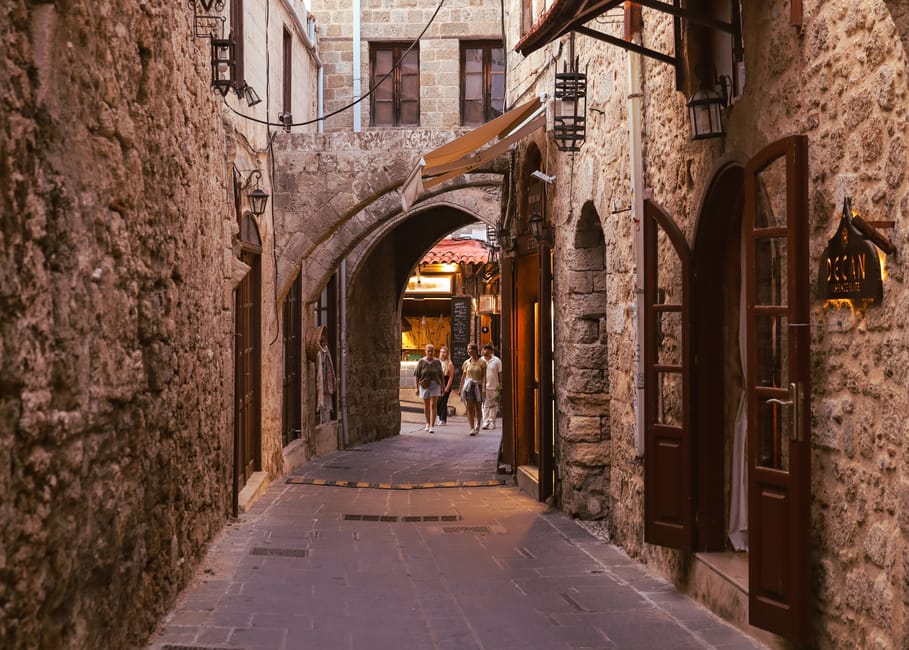
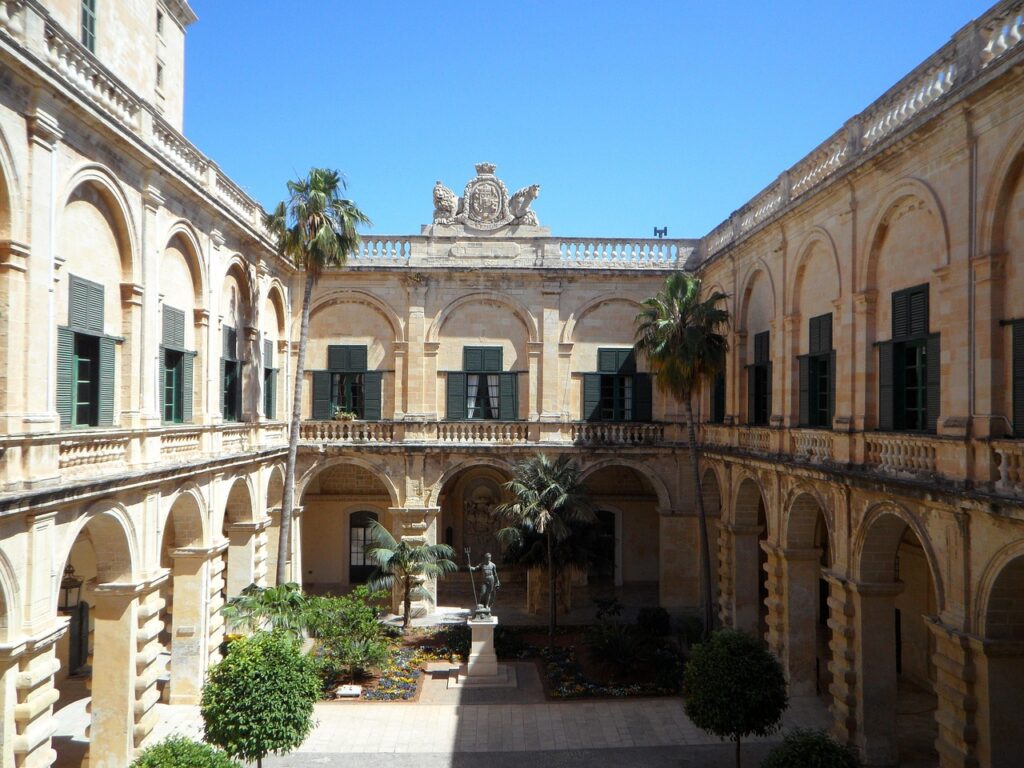
Rhodes’ Old Town is one of the best-preserved medieval complexes in the Mediterranean. It’s a walk through eras where façades, gates and alleys reveal carved faces aplenty: knights, saints, coats of arms, gargoyles and commissioned busts. The hub of this discovery is the square in front of the Palace of the Grand Master and the surrounding streets, especially Ippoton (Street of the Knights) and the complex that now houses museums.
Palace of the Grand Master — Address: Palataki, Rhodes Old Town, Ippoton (Street of the Knights), Rhodes 851 00. Price: typical adult ticket €12.00; reduced (students, seniors) €6.00. Opening hours: usually 08:00–20:00 (April–October); 08:00–17:00 (November–March). The palace offers richly carved façades, balconies, stone lions and statues in the inner rooms. Don’t miss the throne hall and the Gothic reliefs: the faces you encounter there range from noble chivalric depictions to more mystical motifs — a blend of Western and Byzantine influences.
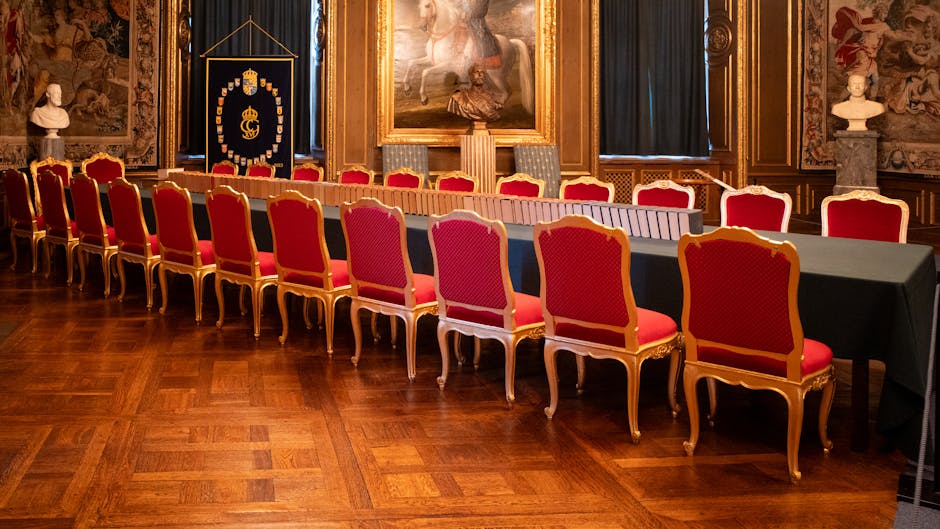
Hospital of the Knights / Archaeological Museum of Rhodes — Address: Plateia Ippokratous 4 (Hospital of the Knights), Rhodes Old Town, 851 00 Rhodes. Price: typical adult ticket €6.00; reduced €3.00. Opening hours: 08:00–20:00 (high season), 08:00–17:00 (low season). Here, in a cloistered setting, ancient sculptures, Roman statues and funerary reliefs sit alongside Roman busts and inscriptions: an excellent introduction to the island’s ancient face. The cloister gardens also display capitals and carved fragments.
Roloi Clock Tower — Address: Platia Ippokratous / near the Old Town entrance, Rhodes Old Town, 851 00. Price: modest entrance fee, often €3.00; hours: 09:00–19:00. The Roloi — a small clock tower overlooking the north of the Old Town — is surrounded by statues and memorial plaques. Climb to the top for panoramic views over rooftops and façade sculptures, revealing carved faces that go unnoticed from street level.
Local tips: start early (between 08:00 and 09:30) to avoid tour groups. Use binoculars or your camera zoom to read high-up details (friezes, sculpted heads, gargoyles). Respect “no touching” signs — many elements are sensitive to hand moisture. For photographers, the golden hour in the evening (around 18:00–20:00 in summer) casts low light that highlights the reliefs.
Mandraki and the Seafront: Harbour Symbols — Deer, Mariners and Memorials
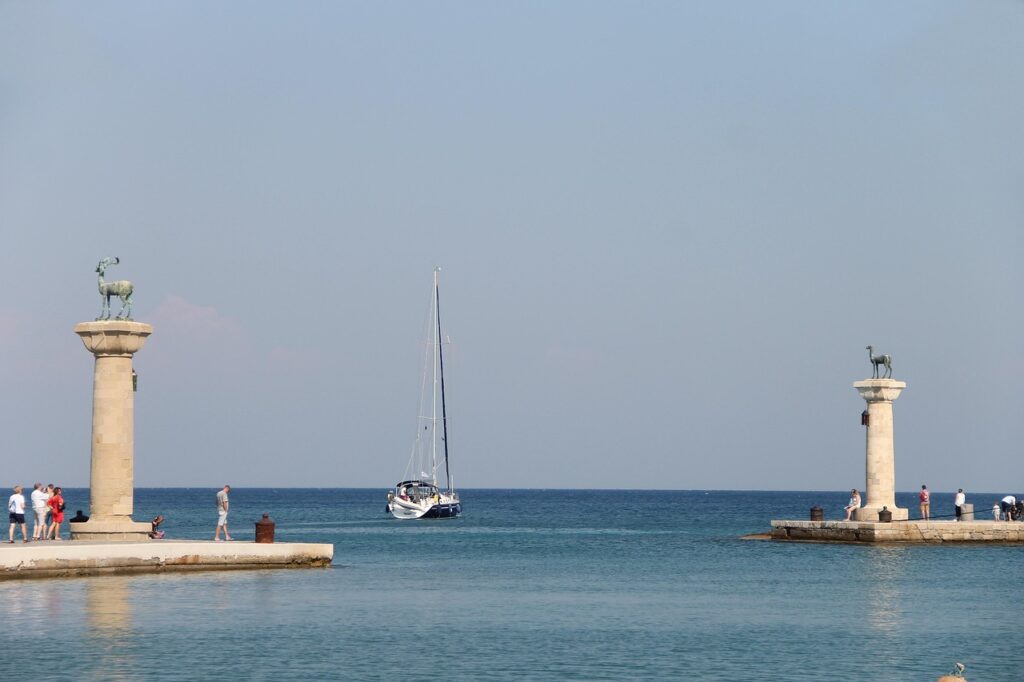
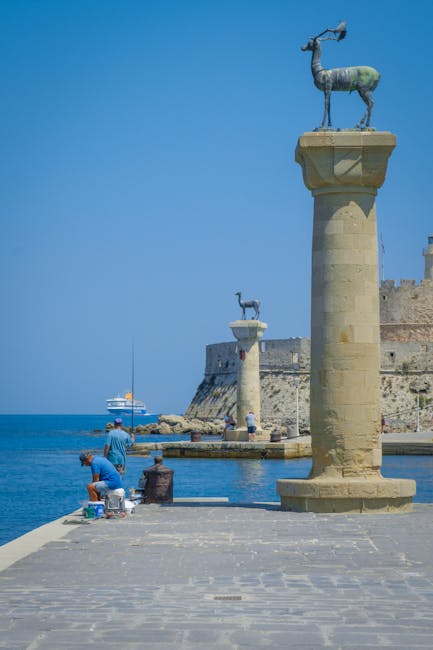
Mandraki Harbour is one of Rhodes’ most iconic spots and, according to tradition, the site where the Colossus once stood. Today there’s no Colossus, but you’ll find two famous bronze deer (Elafos and Elafina) marking the harbour entrance, plus a range of memorials and maritime statues along the quay. This seafront is a must-see: it offers views of masts, modern sculptures and plaques commemorating sailors and naval events.
Elafos and Elafina (Bronze Deer statues) — Location: Mandraki Harbour entrance, Rhodes 851 00. Price: free access. Hours: site accessible 24/7 (beware of waves and tides). These two small bronze deer have become symbolic stand-ins for the Colossus. They’re a photography staple: in the morning the rising sun lights the deer’s haunches, and at dusk they silhouette dramatically against the harbour.
Sailors’ Monument and Memorials — Mandraki’s promenade features several plaques and monuments honoring sailors and conflict victims. Typical address: Mandraki Harbour Promenade, Rhodes 851 00. Numerous contemporary sculptures line the promenade, often near the Naval Museum and small marinas. These works tell Rhodes’ millennia-long relationship with the sea: trade, war, migration.
Naval Museum of Rhodes — Address: Mandraki Marina, Rhodes 851 00. Price: variable, typically €5.00–€8.00. Hours: 09:00–16:00 (season-dependent). The museum displays ship models, navigational instruments and sculpted portraits of captains; it’s a great place to complement your reading of the harbour’s statues with historical archives and photos.
Local tips: stroll the promenade at sunset and climb to the small Reis Hammam fort to view the statues from a higher angle. The central markets near the harbour sell local products — cheese, honey and textiles — and are perfect for a break before heading into the Old Town. Note: some harbour areas can be slippery in the morning from salt accumulation; wear grippy shoes.
Lindos and the Ancient Face: Temples, Deities and Fragmentary Sculptures
Lindos is a coastal village heavy with symbolism: whitewashed alleys, a watercolor bay and, perched above, a dominating acropolis. Lindos’ archaeological site features ancient remains and sculpted fragments that reflect public piety and art in antiquity. Unlike Rhodes Town, Lindos has fewer full-standing statues, but each fragment carries strong heritage presence.
Acropolis of Lindos — Address: Lindos Archaeological Site, Lindos Village, Rhodes 851 07. Price: typical adult ticket €6.00–€8.00; reduced €3.00–€4.00. Hours: 08:00–19:00 (high season). On the acropolis, remains of temples, stoas and walls reveal relief fragments and statue bases. Although most statues have been moved or broken, you’ll still sense an acropolis inhabited by sculpted presences: fluted columns, eroded metopes and bases with inscriptions.
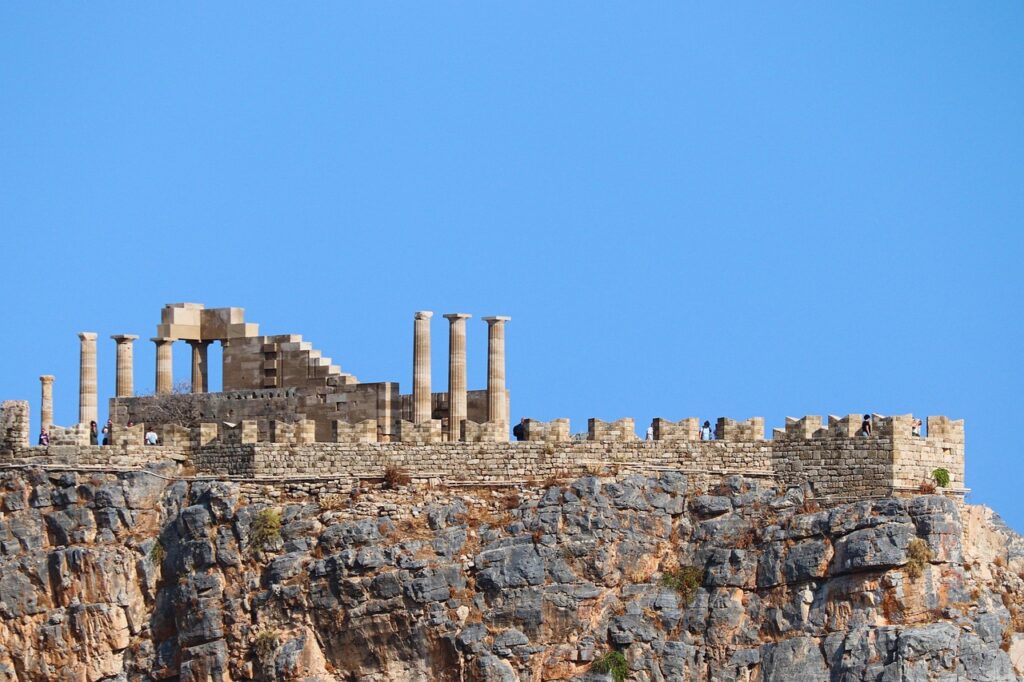
Church of Panagia (Church of Saint Paul) and Religious Images — Address: Church of the Virgin Mary (Panagia), Lindos Village, 851 07. Price: free entry to the church; hours: typically open 09:00–18:00. The interior holds icons and sacred portraits, sometimes displayed as small sculptures or bas-reliefs. Local festivals, notably Lindos’ patron saint celebrations, are moments when religious images are especially highlighted and decorated.
Local tips: for the best light on the ruins, visit in the morning (08:00–10:00) or late afternoon (after 17:00) to avoid heat and crowds. Wear sturdy walking shoes for the climb to the acropolis (rocky path). Combine the visit with a swim in Lindos Bay to round out the day; many cafés and restaurants offer views across the bay and the silhouette of the ruins.
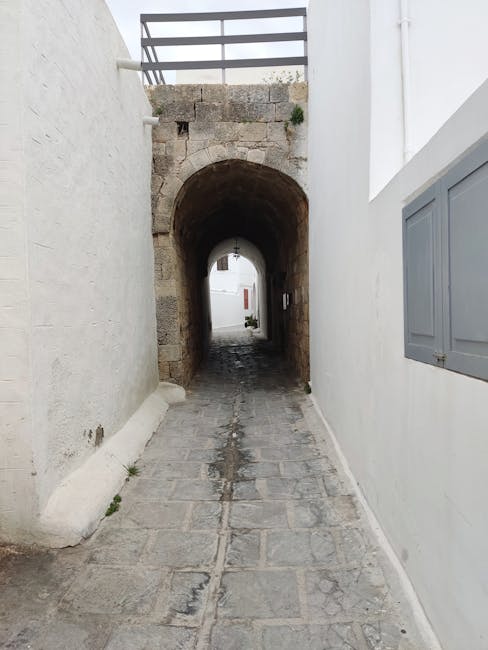
Modern Rhodes: Contemporary Sculpture, Civic Monuments and Public Portraits
Beyond medieval and ancient traces, Rhodes is a living island that absorbed contemporary and commemorative works through the 20th century. These modern faces tell the memory of the 20th century (wars, resistance, local political figures) and the desire to stake a current identity in public space. Walking through New Town you’ll find statues in the street, portraits of local personalities and contemporary pieces displayed in public gardens.
Evangelismou Square and Civic Statues — Address: Plateia Evangelismou, New Town, Rhodes 851 00. Price: free access. Hours: public spaces open at all times. In this square and nearby you’ll find several busts and commemorative plaques honoring local figures — politicians, intellectuals and resistance martyrs. These statues are often accompanied by inscriptions that contextualize the person (dates, achievements).
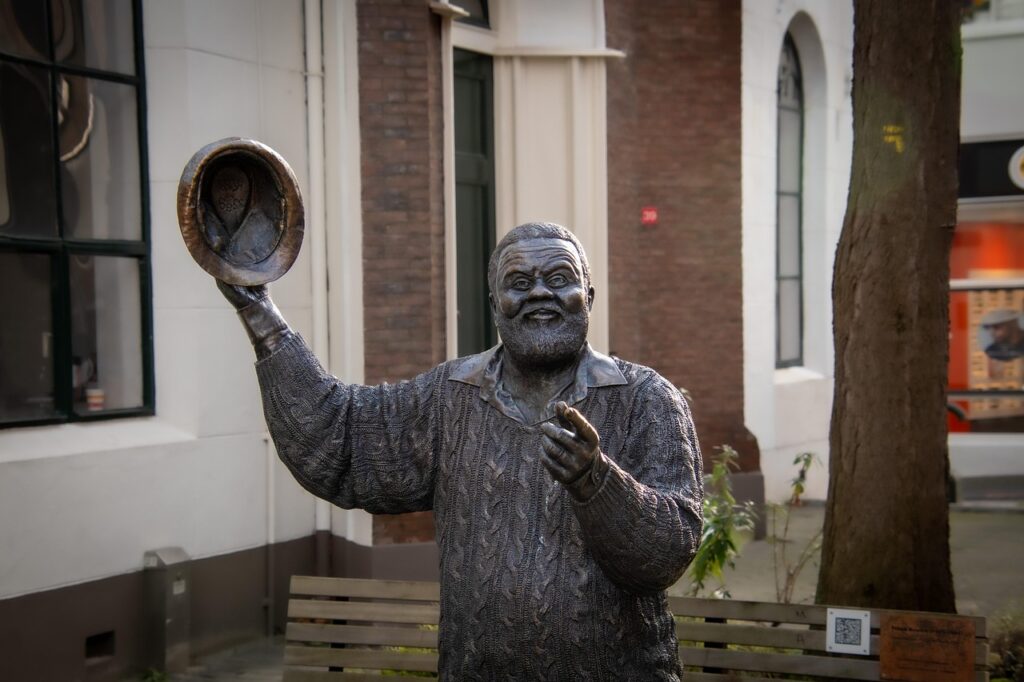
Statue of Diagoras (Diagoras of Rhodes) — Location: often cited as being in the municipal garden or on the promenade (check the exact site locally), Rhodes New Town, 851 00. Price: free access. Diagoras, a famous Rhodian boxer of antiquity, is a recurring modern commemoration: he symbolizes sporting glory and local pride. Statues and plaques dedicated to him serve as cultural meeting points for sports and school events.
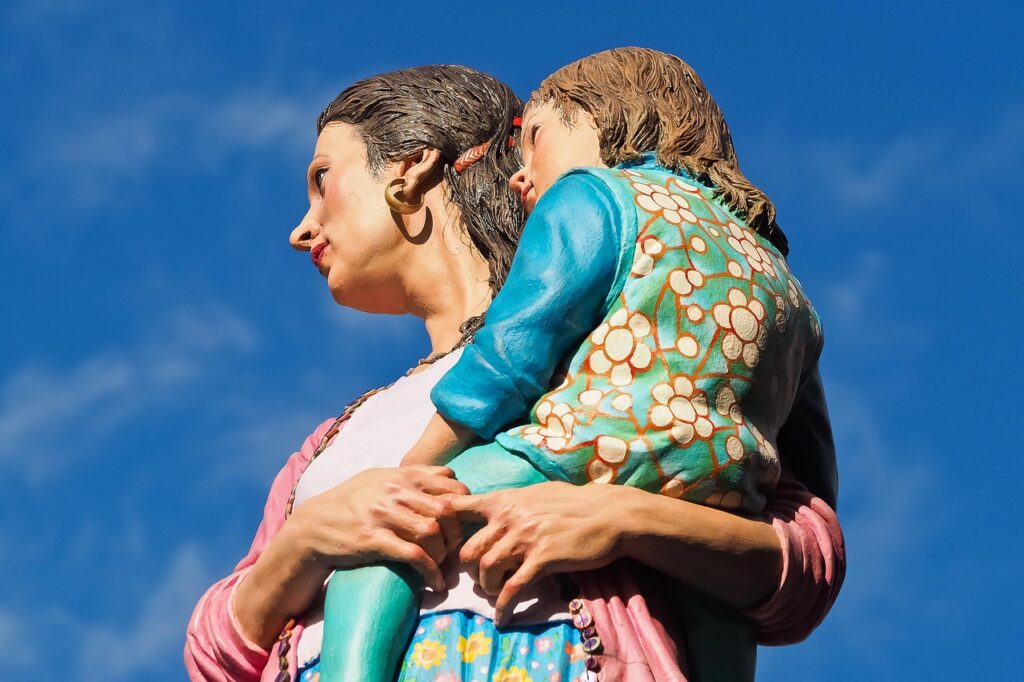
Contemporary sculptures in parks — The municipal garden and cultural spaces host modern art: abstract constructions, corten steel installations and stylized portraits. These sculptures reflect a modern appropriation of urban space and provide a striking contrast with the more “historical” faces of the Old Town. They’re often signed by contemporary Greek artists and are the subject of talks or temporary summer exhibitions.
Local tips: use parks for a contemplative break between visits. The municipal guides and the tourist office (Address: Rhodes Municipal Tourist Office, Plateia Iroon 1, Rhodes 851 00) sometimes run thematic sculpture trails; check in early in your stay. For enthusiasts, check the temporary exhibition schedule at the Municipal Museum or local galleries — they complement public works with studio presentations.
Sculpting Memory: Memorials, Cemeteries and Places of Remembrance
Statues and busts are not merely decorative: they mark memory. In Rhodes several memorials and public cemeteries display sculpted portraits and plaques documenting conflicts, migrations and painful episodes of the 20th century. These places require a respectful approach and offer deep insight into local society.
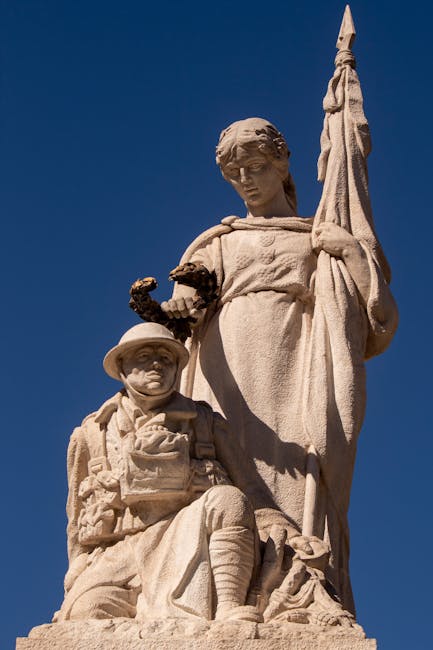
Military Cemetery and War Memorials — Location: several sites on the island host war memorials (for example, Rhodes Military Cemetery or various memorials in Old Town and New Town). Typical addresses: Military Cemetery, Kastro / Old Town; Plateia Iroon and other commemorative squares, Rhodes 851 00. Price: free access. These monuments show soldiers’ busts, engraved plaques and sometimes allegorical statues (weeping mothers, winged figures). Reading these sculptures helps you understand how the community chose to embody loss and heroism.
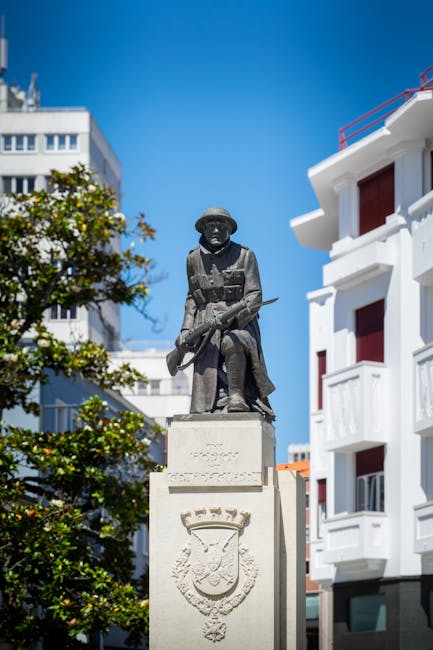
Monuments to civilian victims and commemorative plaques — Many walls in the Old and New Towns bear plaques recalling deportations, depositions and tragic events. Local museums (Rhodes Historical Museum, typical address: Plateia Iroon 2, Rhodes 851 00) provide archives and often photographic reproductions of victims’ faces. Themed guided tours (contemporary history) allow a contextualized, sensitive understanding.
Local tips: treat these places with discretion and respect: photography is usually permitted, but avoid intrusive shots during memorial ceremonies. Ask museum staff for brochures and historical explanations. These visits are especially rich when paired with oral histories; don’t hesitate to talk with locals to gather lived testimonies.
Suggested Routes and Practical Tips for Discovering the Faces of Rhodes
To get the most out of exploring statues and portraits, here are practical routes and operational tips. These suggestions combine geographical logic, opening hours and moments of heightened visual impact.
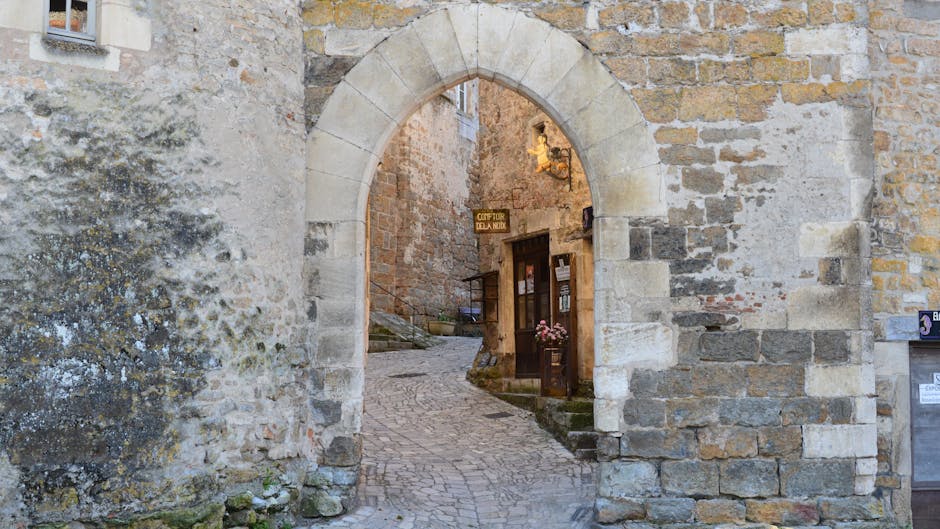
- “Old Town Intensive” route (half-day): Start at 08:30 from the Gate of Amboise (Address: Gate of Amboise, Old Town Rhodes). Visit the Palace of the Grand Master (09:00–10:30), stroll down the Street of the Knights (10:30–11:15), climb the Roloi Clock Tower (11:15–11:45), then lunch in the Old Town. Advantage: soft morning light and fewer tour groups.
- “Mandraki & Seafront” route (afternoon): Arrive at Mandraki around 16:30 for port light, photograph the deer (Elafos & Elafina), visit the Naval Museum (if open) and walk toward the small fort. Finish with a coffee at sunset. Advantage: dramatic silhouettes at dusk.
- “Lindos Full Day” route: Leave early (08:00) to avoid heat and crowds; visit Lindos Acropolis (08:30–11:00), lunch in Lindos village, then a siesta and an afternoon swim. Advantage: best conditions for visiting the ruins and relaxing by the sea.
General practical tips:
- Tickets and concessions: bring proof for reduced rates (student card, senior card). Museums and monuments often apply reductions strictly.
- Opening hours: always check seasonal hours: many sites extend opening in summer (April–October) and cut back in low season.
- Shoes: opt for closed, non-slip footwear; cobbles and stone steps can be slippery.
- Respect: some places are religious or commemorative: follow signage, maintain distance and observe ceremony times.
- Photography: exterior shots are widely allowed; for museum or church interiors, check signage (some rooms require a photo fee).
- Getting around: the Old Town is best explored on foot. For Lindos and beaches, plan for a car or local bus (regular services from Rhodes Town; schedules and fares available at local ticket offices).
Conclusion — Between Memory and the Present: Now It’s Your Turn to Tell the Story
Rhodes is an island of many gazes: each statue, bust and bas-relief is a pause for a story. The faces of Rhodes are more than an inventory of objects: they are emotional and civic landmarks, works of art and identity markers. Walking through the Old Town, Mandraki Harbour, Lindos Acropolis and the contemporary spaces of New Town, you’ll move from chivalric heroic depiction to the quiet of commemorative monuments and on to the expressive freedom of modern sculpture.
This guide gave you precise addresses (Palace of the Grand Master, Ippoton / Old Town; Archaeological Museum of Rhodes, Plateia Ippokratous 4; Mandraki Harbour, Rhodes 851 00; Lindos Archaeological Site, Lindos 851 07), typical information on prices and hours, and local tips to optimize your visit. Remember that on the ground opening times can vary: check with local tourist offices (Rhodes Municipal Tourist Office, Plateia Iroon 1, Rhodes 851 00) for up-to-date info or themed guided tours.
Lastly, give yourself time to listen: people in Rhodes love to share the stories behind statues — family anecdotes, wartime accounts, religious festival memories — and these tales often add unexpected depth to what you thought you knew. Whether you’re a history buff, a photographer, a curious traveler or simply after a beautiful itinerary, the faces of Rhodes are waiting — polished by time, strong in stone, revealing an island that marries memory and modernity. Safe travels and happy discoveries!