





Introduction — Why Rhodes Is a Must-Visit Diving Destination
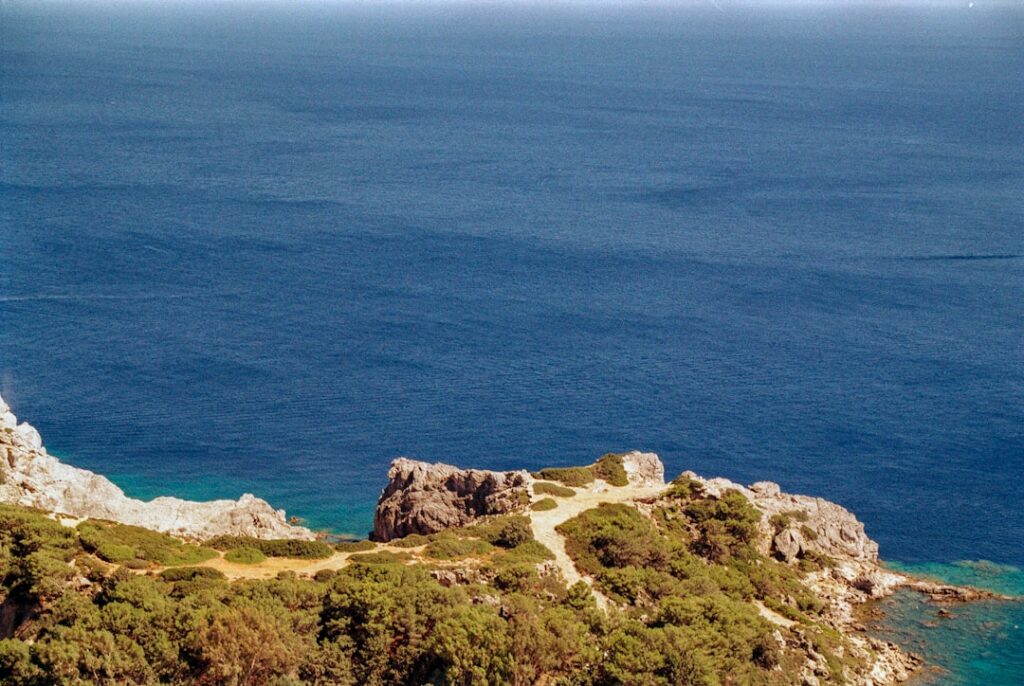
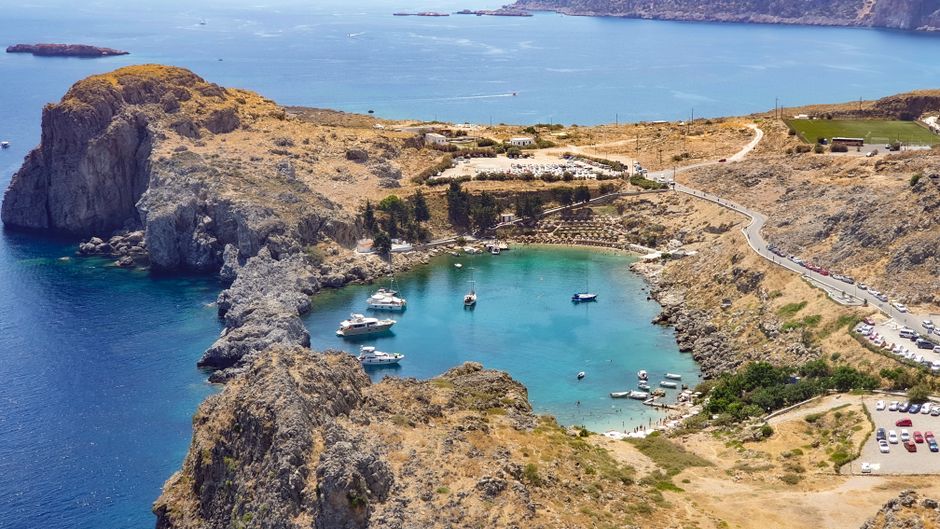
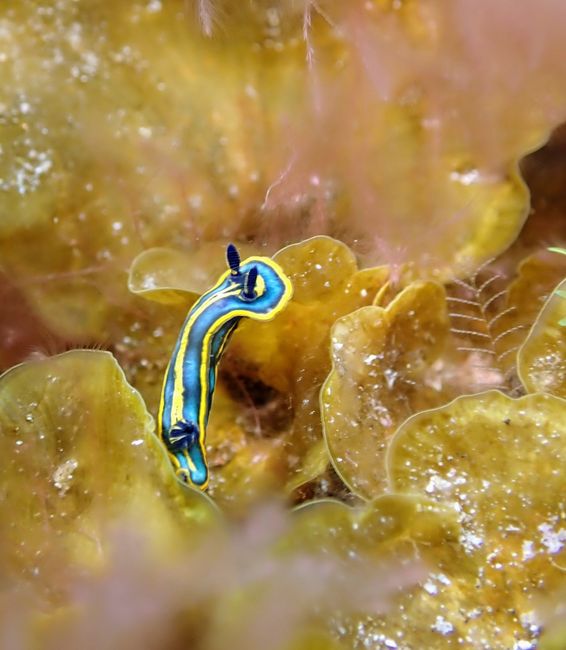
Rhodes, the largest of the Dodecanese islands, is more than a historic seaside getaway — it’s an underwater playground full of striking contrasts. From golden coves with crystal-clear water to sheer walls where light filters through gorgonians, the island offers dives for every level — from sheltered beginner swims in natural pools to technical dives along wrecks and canyons. Mediterranean light boosts visibility, the water is generally warm from May to October (about 18–26 °C depending on the season), and while marine life isn’t as tropical as the Red Sea, it’s still very rich: groupers, shoals of seabream, moray eels, nudibranchs and sometimes schools of tuna or bonito out in the blue.
This guide lists the “Top 10 dive sites in Rhodes,” chosen for accessibility, ecological interest and variety of technical profiles. For each site you’ll find the exact coastal access or address, practical notes on opening hours or the best season, typical price ranges charged by local dive centers in euros (€), an immersive description of the seabed and topography, plus local tips to make the most of your dives (gear, safety, possible currents, and the best time of day). The spots cover the east coast, the west coast, and the northern and southern tips so you can choose depending on wind and sea state.
Before diving, keep a few basic rules in mind: check required certification (PADI Open Water for most sites, Advanced Open Water for deep walls or deeper dives), respect local fauna and flora (don’t touch gorgonians or corals), and book ahead in high season (July–August). The prices shown are average rates from centers with multilingual instructors and equipment included; they can vary by season, dive type (try dive, guided dive, technical dive) and gear rental. Also consider hotel pickup — many centers offer transfers from Rhodes Town and coastal villages for a reasonable extra fee.
1. Anthony Quinn Bay (Kolymbia) — Iconic Bay, Perfect for All Levels
Address: Anthony Quinn Bay, Kolymbia, 851 06 Rhodes, Greece. Access: public roadside parking (south side of the bay).
Opening hours: the beach and access points are open 24/7; dive centers usually run trips 09:00–17:00.
Typical prices: guided dive (incl. gear) €45–60; try dive (Discover Scuba) €75–110.
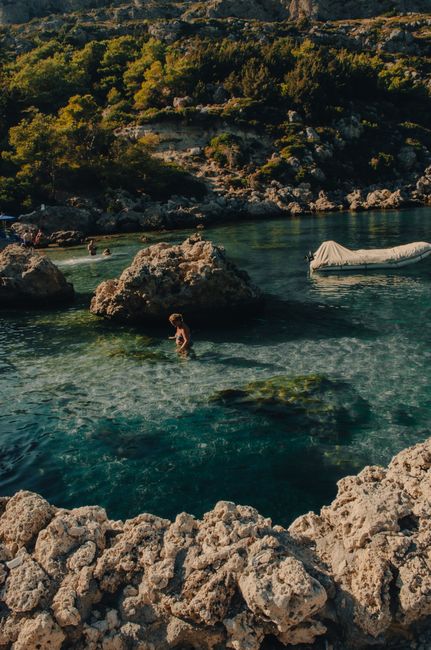
Description: This small rocky bay is famous for its turquoise waters and underwater caves. Anthony Quinn Bay offers shallow dives ideal for beginners and interesting terrain for experienced divers. The seabed features sculpted limestone, faults and small arches; wildlife includes blennies, morays and nudibranchs. Dives are often conducted close to shore (3–18 m), making this a safe spot when conditions are calm.
Local tips: aim for an early morning dive before the bay fills with swimmers. The dominant summer wind (meltemi) comes from the north; if the bay is exposed, switch to an east coast site or reschedule. Bring a light rashguard — some rocky entry/exit sections can cause chafing.
2. Ladiko Bay — Wall Drop and Rich Coastal Biodiversity
Address: Ladiko Bay, near Faliraki, 851 03 Rhodes, Greece. Parking: small car park above the bay, access via stairs.
Opening hours: free access; dive trips 08:30–17:30 depending on tide and conditions.
Typical prices: guided dive €50–65; 2-dive package €90–120.
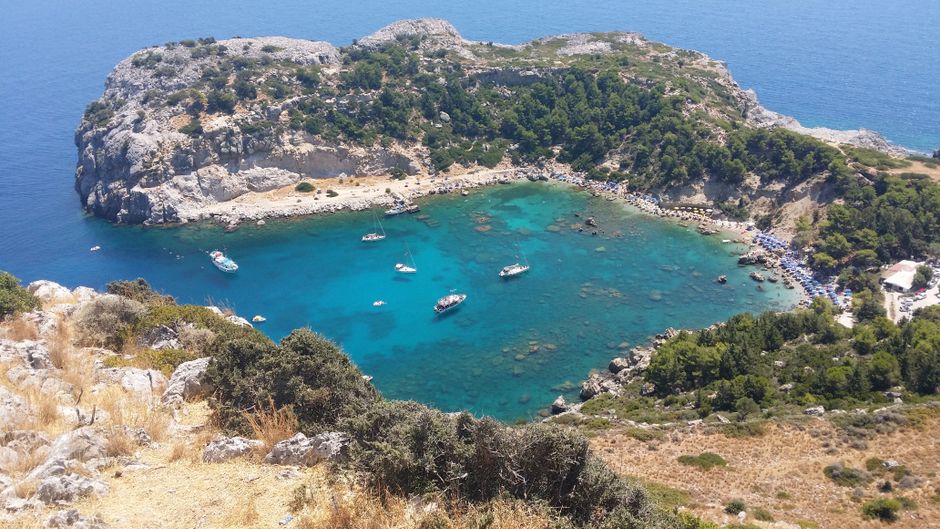
Description: Just a few hundred meters from Anthony Quinn Bay, Ladiko features a gradual wall dropping from 5 m down to around 30 m, with overhangs and small tunnels. Rocky bottoms covered in algae shelter burrowing life and shoals of pelagic fish. Drift dives along the wall are common and highly visual, with excellent photo opportunities thanks to the water clarity.
Local tips: recommended for Open Water divers and above; if currents are present you’ll need a support boat and an experienced guide. Best diving runs May–October. Don’t forget a surface marker buoy for your ascent if the area is busy with leisure boats.
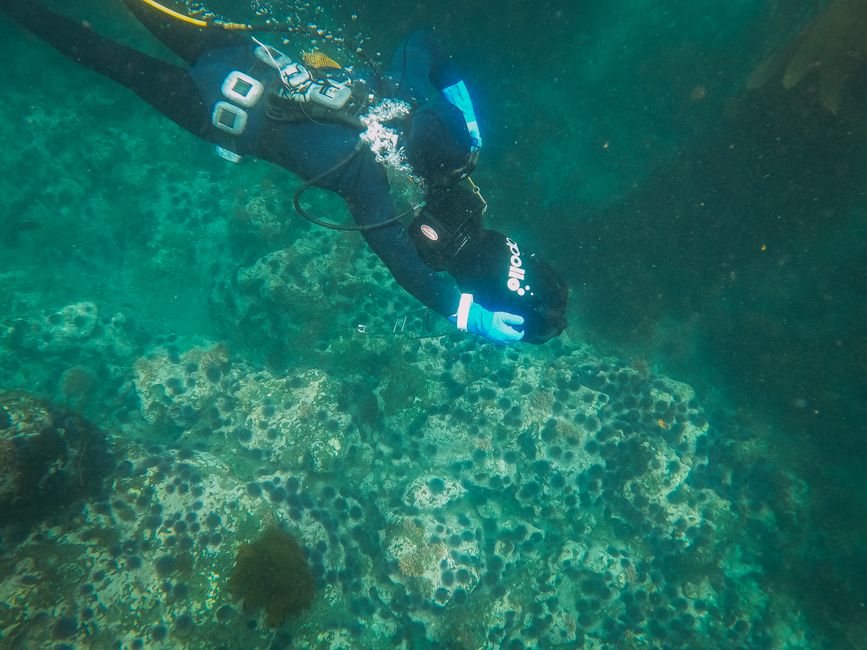
3. Kallithea Springs Reef — Historic Architecture Meets Relaxed Diving
Address: Kallithea Springs (Thermes), 851 03 Kallithea, Rhodes, Greece. Public entrance: Kallithea Springs, Kallithea 851 03.
Opening hours: historic site open 08:00–20:00; dives usually run 09:00–16:00.
Typical prices: guided dive €55–75; snorkel + dive packages €70–120.
Description: Around the Kallithea springs you’ll find a mix of built-up coast, rock platforms and underwater habitats with sponges and anemones. Dives are shallow (3–20 m), ideal for beginners and photographers looking to capture geological formations and light streaming through rock arches. The site is also popular for snorkeling, a perfect first sea experience for newcomers.
Local tips: arrive early to enjoy morning light in the water and avoid midday crowds on land. Several local operators — for example Rhodes Dive Centre (pickup from Kallithea) — offer combined dive/snorkel trips. Check parking availability and sea conditions before heading out.
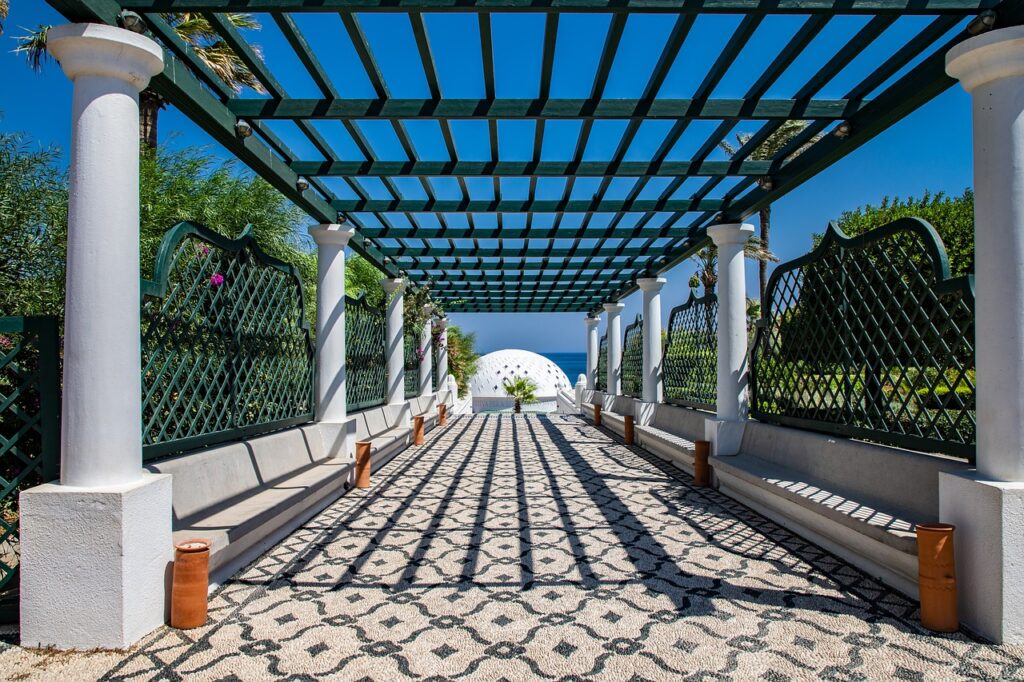
4. Marine Park Reefs (East Coast) — Ecological Riches and Guided Dives
Address: Marine protected area roughly between Kolymbia and Kiotari, access via local clubs (e.g., Dive Club Rhodes, various launch points along the east coast).
Opening hours: boat trips 08:30–17:30; reservations required.
Typical prices: half-day boat trip (1–2 dives) €85–140; equipment rental available on request.
Description: This zone includes several small reefs and Posidonia oceanica seagrass meadows — a key habitat for Mediterranean biodiversity. Dives showcase underwater prairies that host cuttlefish, octopus and juvenile fish. Some sites feature shallow canyons and rocky plateaus down to 25–35 m for advanced divers. Locations are chosen depending on wind and visibility.
Local tips: Posidonia is protected — do not damage it. Use soft-blade fins and maintain perfect buoyancy. These dives are superb in spring and early autumn when the water is clear and less crowded.
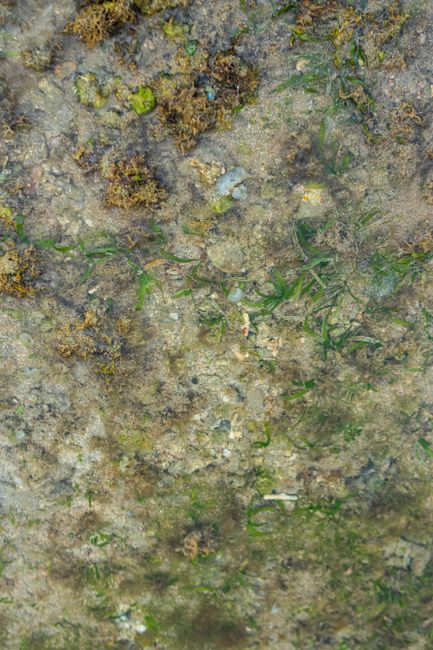
5. Vlycha Bay & West Coast Reefs — Calm Dives and Coastal Wildlife
Address: Vlycha Beach, Vlycha, 851 00 Rhodes, Greece. Access via the main road between Rhodes Town and Faliraki.
Opening hours: beach access 06:00–22:00; dive trips 09:00–16:00 depending on tides.
Typical prices: guided shore dive €45–70; 2-dive package €85–130.
Description: Vlycha Bay features sandy bottoms alternating with rock slabs and gorgonians. These are relaxed dives, often done from shore, perfect for beginners and macro photography. Common depths range 5–25 m and visibility typically sits between 10 and 25 m depending on season.
Local tips: check west-coast conditions — the area can be more exposed to the meltemi in summer. The best times to spot benthic life are at sunrise and sunset. Bring a dive light if you plan a guided night dive to explore nocturnal species.
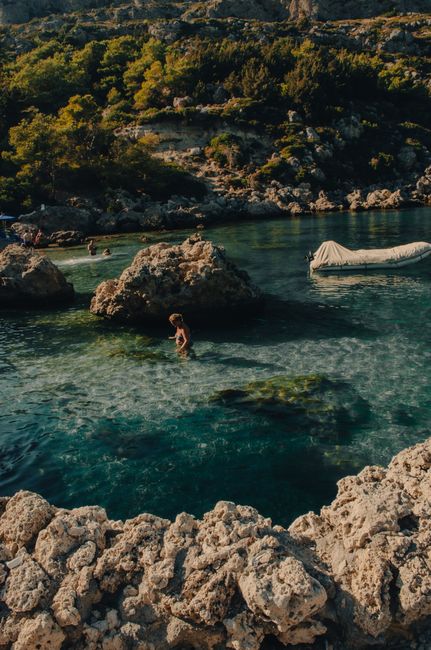
6. Kolymbia Walls & Caves — Sculpted Walls and Easy Caves
Address: Kolymbia coastal area, Kolymbia 851 06, Rhodes, accessible via public parking along the coastal road.
Opening hours: trips run 08:30–17:00; coastal swimming access is free.
Typical prices: guided dive €50–80; tech/private guide dives €120–180.
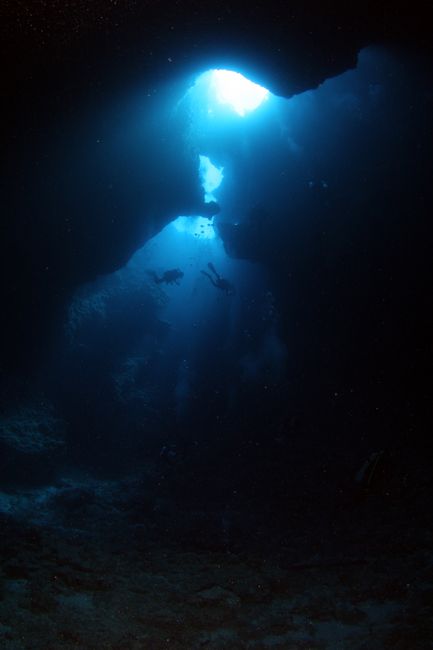
Description: This series of dives offers vertical walls peppered with cavities and small caves (depths 8–40 m). Many overhangs shelter groupers and shoals of seabream. The caves are short and non-technical, suitable for Open Water divers accompanied by an experienced guide. Natural lighting creates dramatic scenes for underwater photography.
Local tips: confirm the experience required for cave dives, even short ones. Local guides often recommend a minimum of 30 logged dives for certain cave entries. Bring a torch and never enter alone — caves can be disorienting.
7. Prasonisi Outer Reefs (South Tip) — Wild-Water Diving
Address: Prasonisi peninsula, Prasonisi, 851 05 Rhodes, Greece. Access via the southern coastal road, parking near the beach.
Opening hours: beach access varies with kite-surfing activity; dives usually scheduled early morning 07:30–11:00.
Typical prices: special trips (often pricier due to distance) €95–160; 2-dive package €150–220.
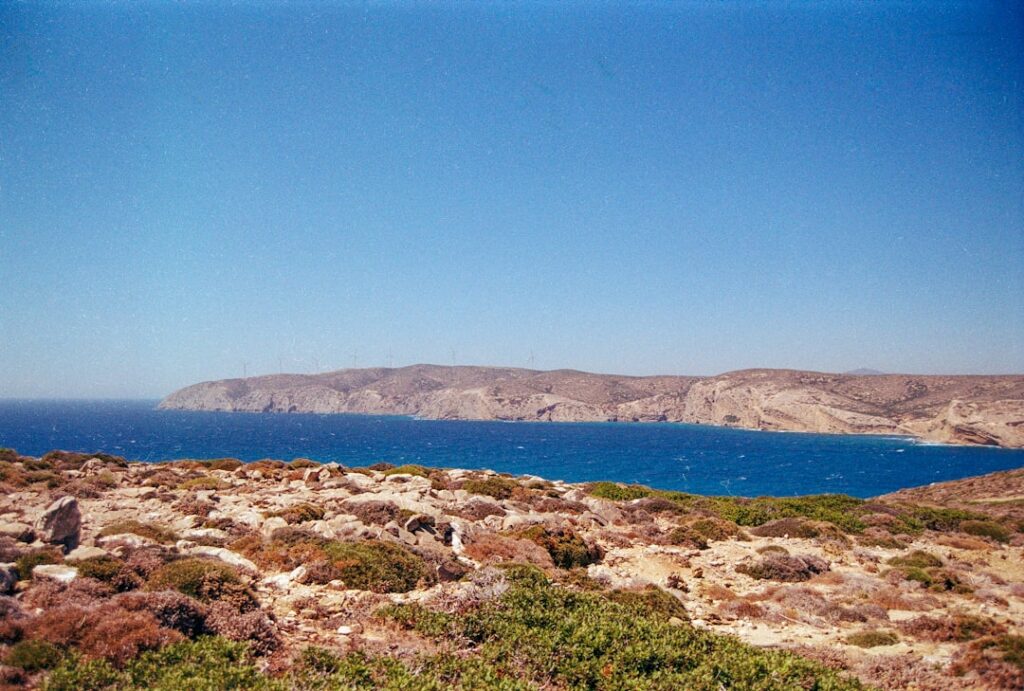
Description: The southern tip of Rhodes, Prasonisi, is known for windy surface conditions but offers dives rich in pelagics and steep rocky relief. Expect moderate currents and somewhat cooler water. This site suits experienced divers and delivers notable encounters — schools of migratory fish and occasional stingrays.
Local tips: this spot is seasonal (best May–October excluding strong wind periods). Use a specialist operator for logistics. Check approach routes to avoid kite-surfing zones and plan early-morning dives when surface activity is lower.
8. Lighthouse Point (Akramitis) — Blue-Water Dives and Pelagic Encounters
Address: Akramitis Lighthouse area, northwest coast of Rhodes, near Kamiros Skala, 851 08 Rhodes, Greece. Access by boat via charters or local clubs.
Opening hours: boat trips 08:00–16:30; scheduling depends on tide and wind.
Typical prices: 2-dive boat trip €95–150; private guide on request €160–220.
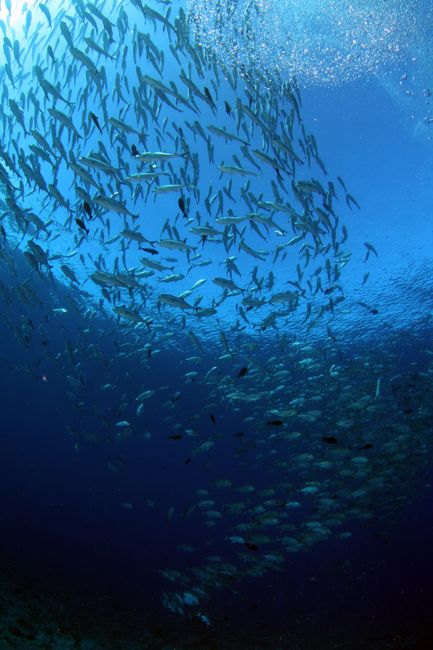
Description: The walls around the Akramitis headland and lighthouse drop into deeper water, encouraging pelagic species and fish schools. Open-water dives here require solid experience and, often, a support boat for safety. Underwater rocky relief and canyons sometimes host large morays and cuttlefish.
Local tips: carry complete gear (dive computer, surface marker buoy) and always check currents before entering. This area is ideal for drift dives and should be done with an experienced guide and a support boat.
9. Shipwreck « Giannis D » (Hypothetical/localized wreck) — Wreck Adventure for Certified Divers
Address: Wreck reported off the southeast coast near Lindos approach, access via dive boat from Lindos port, Lindos 851 07, Rhodes, Greece.
Opening hours: trips from Lindos 09:00–16:30; booking 24–48 hours in advance recommended.
Typical prices: guided wreck dive €95–160; double dive + technical briefing €160–240.
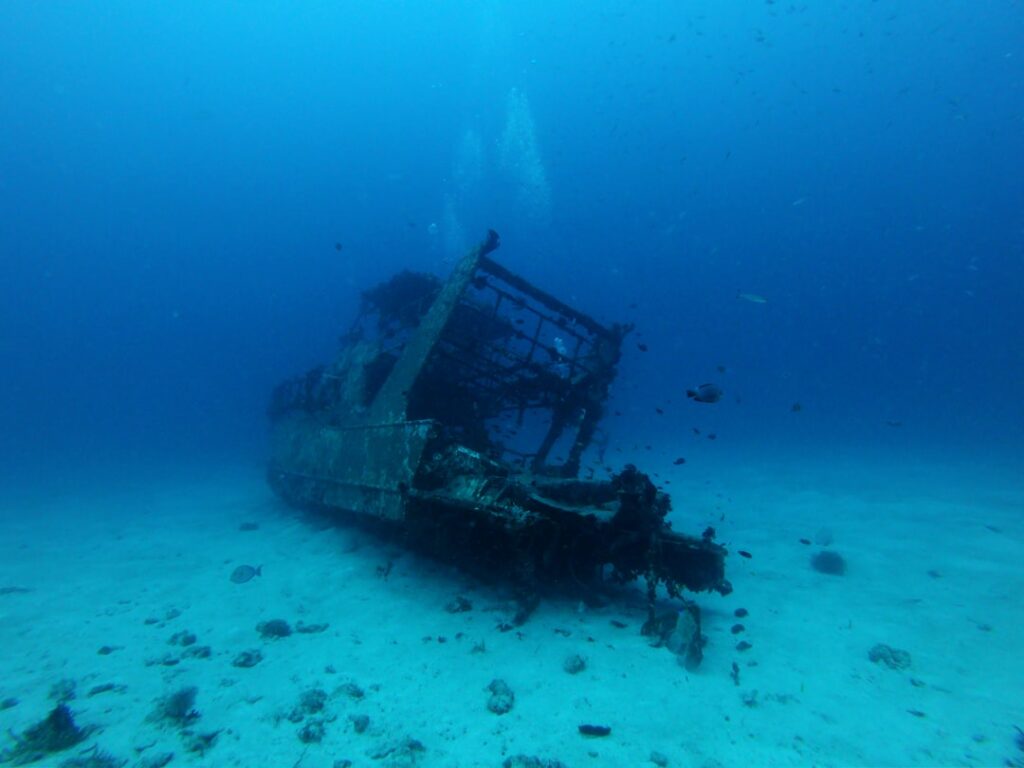
Description: One of the wrecks accessed from the southeast coast is commonly referred to as the « Giannis D » (a small cargo vessel locally identified by clubs). The wreck lies between 18 and 35 m and is colonized by sponges and other sessile life. Cavities and propeller areas offer shelter for morays and conger eels. This dive requires Advanced Open Water or equivalent and good underwater navigation skills.
Local tips: check the current state of the wreck and respect no-entry limits: internal exploration is strictly for technical divers. Local clubs usually provide a thorough briefing and a specialized guide. Consider dive insurance and carry an emergency decompression kit for deep dives.
10. Kastri & North Coast Rock Gardens — Macro and Colorful Dives
Address: Kastri rocky coast, northeast Rhodes near Theologos/Kastellakia area, accessible via small harbors (e.g., Afandou, Theologos).
Opening hours: outings from morning to late afternoon; shore access varies with beach seasonality.
Typical prices: shore dive €45–70; guided photo dives €80–140.
Description: The north’s rock gardens form a patchwork of submerged rocks and sandy spots that make excellent macro-photography locations: nudibranchs, shrimps, small cuttlefish and angelfish are common. Dives generally stay between 5–25 m and many sites are suitable as shore dives. Water is often clear and the life very photogenic.
Local tips: bring macro lenses and a stable light source. Late-afternoon outings increase your chances of spotting nocturnal species. Best months for macro are June–September when juveniles are abundant.
Conclusion — Planning Your Dives in Rhodes: Safety, Logistics and Respect
Rhodes offers an extremely varied range of dives: calm educational bays for novices (Anthony Quinn, Ladiko), walls and caves for intermediate explorers (Kolymbia Walls, Kallithea), and deeper wrecks or drop-offs for advanced divers (Prasonisi, Lighthouse Point, the « Giannis D » wreck). To get the most from your trip, plan outings around wind (north meltemi in summer), season (best visibility May–October) and your certification level. Local centers usually offer flexible packages — from hotel pickup to multi-dive deals — and publish the price ranges shown above, which vary with season and activity type.
Safety must always come first: always dive with a local guide who knows the currents and site conditions, respect your certification depth limits, routinely check your gear and use a surface marker buoy for ascents. Respect the marine environment — don’t touch corals, don’t take anything from the seabed, and don’t chase wildlife. With preparation, respect and curiosity, your dives in Rhodes will become unforgettable experiences, offering as many underwater encounters as iconic coastal views. Happy bubbles and safe diving!